
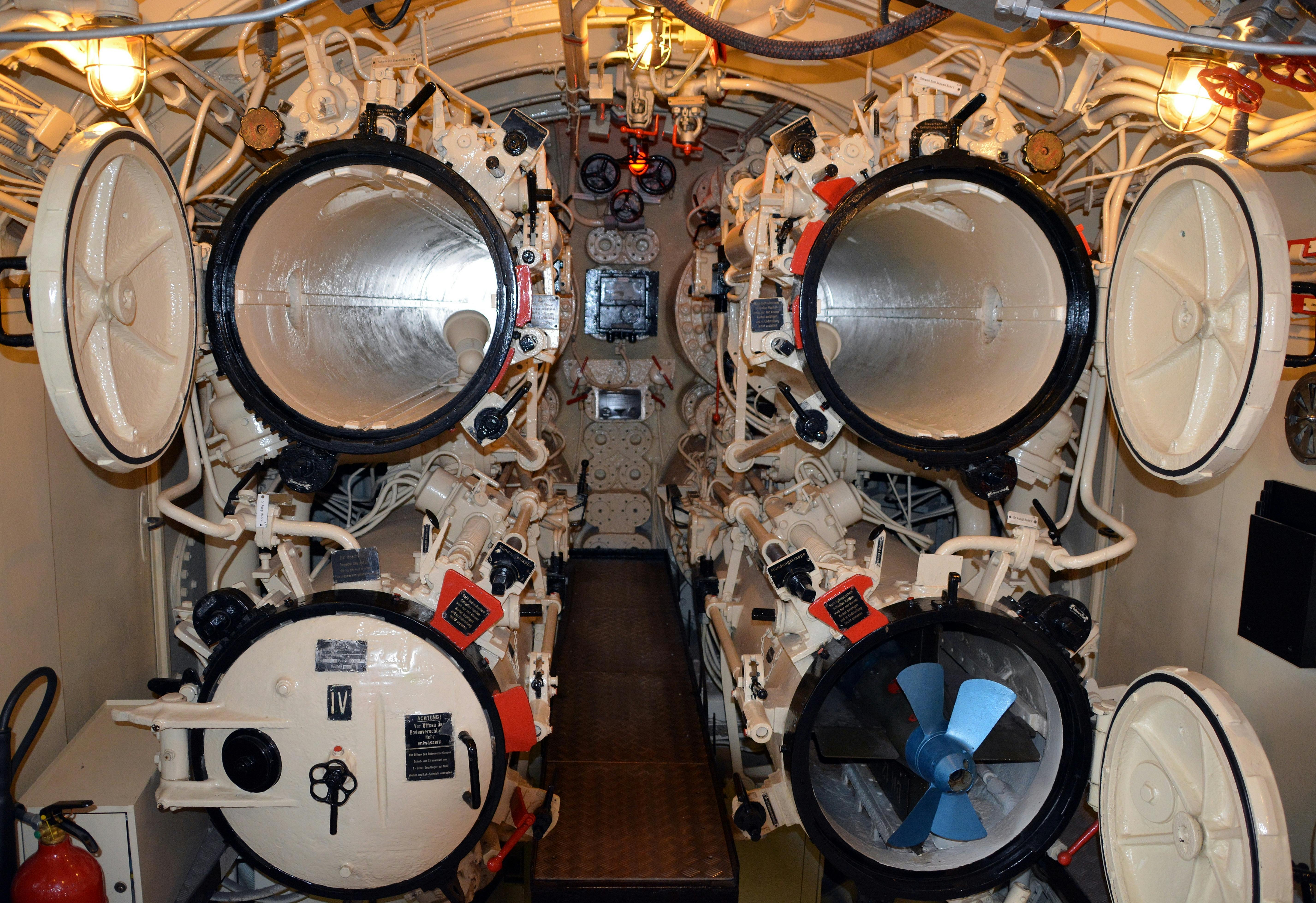
The recent sinking of an Iranian frigate, the IRIS Dena, reacquainted the world with a weapon that has lurked the seas for over a century, the torpedo. Notwithstanding, this represents the U.S. Navy’s first such kill since the Second World War, and only the second carried out by a nuclear submarine, after HMS Conqueror sank the ARA General Belgrano in 1982 (Lendon, 2026). This event is taken as a catalyst to briefly present the torpedo and how it is adapting as a weapon system to the threats of the 21st century.
The Mk 48 Heavy-Weight Torpedo (HWT)
The torpedo fired by the Los Angeles-class attack submarine, USS Charlotte, could be none other than the Mk 48 HWT. Since the early 1980s, the Mk 48 has been the premier submarine-launched torpedo of the U.S. Navy, designed for both Anti-Submarine Warfare (ASW) and Anti-Surface Warfare (ASuW). Over its long service life, the Mk 48 has undergone extensive modifications to keep pace with evolving missions, which will be discussed hereafter. Originally, the antecedent of the Mk 48 was conceived as an ASW weapon to counter growing adversarial capabilities, and only during development did the ASuW capability become a requirement. Remnants of this specialization in ASW are evident in the torpedo’s reattack capability, which allows for an updated attack profile to be uploaded if the initial run is unsuccessful.
This dual-purpose design was reflected in an increase in warhead size from roughly 250lb to a respectable 650lb, a destructive power vividly demonstrated in the sinking of the IRIS Dena. Unlike the Second World War-era imagery of torpedoes striking below the waterline, the Mk 48 is engineered to detonate beneath the keel, creating a void that snaps it, fatally compromising the vessel’s structural integrity and sending it swiftly to the seafloor.
Returning to its evolution, its adoption as a versatile weapon system coincided with the phasing out of legacy torpedoes and the transition embodied in the Los Angeles-class submarine into the digital age with associated fire-control systems. The Mk 48 came into its own with the Advanced Capability (ADCAP) upgrade package which ostensibly made it a whole new torpedo. Improvements leveraged advances in microelectronics freeing internal volume to enhance performance both in range and speed. The ADCAP, first an answer to the ground-breaking Soviet Alpha-class in 1975, has since then become the baseline for all subsequent modifications to the Mk 48 HWT (Migaki, 2024).
The upgrades made to the Mk 48 are numerous, and they take shape along two axes, affecting both hardware (Mod) and software through Advanced Processor Builds (APB). Currently, the U.S. Navy fields both Mod 6 and Mod 7, which respectively made the Mk 48 quieter and more resilient to countermeasures, with Mod 7 reaching Initial Operational Capability (IOC) in 2006. Since then, the torpedo's development has become a collaborative effort with the Royal Australian Navy, with plans extending into Mod 9, which will introduce, among other upgrades, a new propulsion section. In terms of APB, currently APB 5 is the standard across Mod 7 with APB 6 and its improved sonar processing slated for IOC in FY26. This biaxial approach has over the decades produced an ever more capable HWT, and showcases the strength of a program comprehensively tackling both hardware and software. This demonstrates the U.S. Navy’s commitment to this weapon system, with its readiness further confirmed in the amount of testing that the Mk 48 still undergoes despite decades of service, with Fiscal Year (FY) 2024 seeing 28 test firings (DOT&E, 2023).
These capabilities translate into a weapon system that, despite having surpassed 50 years of service, remains both viable and deadly. Such longevity does not come cheap: procuring 79 Mk 48 in FY25 cost the taxpayers $333.147 million, implying a unit price of roughly $4.2 million (Comptroller, 2024). Even accounting for additional expenses associated with support and testing, this high price tag has led some to question the need of such a sophisticated weapon system in a future conflict characterized by saturation.
Viable Alternatives
Over at least the past five years, the U.S. military has actively pursued weapons systems suited to attritional warfare, with expendable capabilities primarily manifesting in unmanned platforms and loitering munitions.
The U.S. Navy’s submarine force is not far behind: in June of 2025, a call was issued for an undersea weapons program that was later described as an affordable, scalable, single-use HWT. This call was issued by the Strategic Capabilities Office, specialized in rapidly addressing urgent operational and strategic challenges, and directed at non-traditional industry partners with expertise in electric propulsion, batteries and additive manufacturing. Little is publicly available regarding the progress of this project, with the most significant development to date being the release of an official solicitation in November 2025 (SAM, 2025).
The idea of the Rapid Acquisition Procurable Torpedo (RAPTOR) first came to light in 2024 at the Navy League’s Sea-Air-Space symposium, following remarks by Captain Chris Polk. RAPTOR is intended to be a limited-capability, mission-specific weapon, delivering a warhead comparable to that of a Mk 48 at a fraction of the cost – reportedly as low as 1/8th with an auspicious price tag of $500.000. A key concern highlighted by Polk is the system’s resilience to supply chain disruptions, an area in which the more complex and recently restarted production line of the Mk 48 is more vulnerable. A simpler system can translate into a numerical advantage and, if recent developments are anything to go by, the program appears to be gaining traction (Seck, 2024).
While RAPTOR addresses sustainability, another U.S. Navy initiative seeks to mitigate the challenges associated with submarines’ low magazine depth by combining two programs. The Revolver Multi-Payload (MP) program, developed by the Office of Naval Research (ONR), is designed to integrate the Mk 58 Compact Rapid Attack Weapon (CRAW) with the 21-inch torpedo tubes of the Virginia-class submarine. Conceptually similar to the U.S. Air Force’s Common Strategic Rotary Launcher (CSRL), the Revolver MP is not a permanent installation but rather a module, plug and play when needed, intended to maximize payload capacity within constrained space and enable firing in quick succession. A key distinction lies in purpose: whereas the CSRL is primarily a tactical solution, the Revolver MP carries broader strategic implications, such as a submarine not needing to leave its Area-of-Operation (AOR) just due to lack of munitions. This program is progressing steadily, with a Virginia-class submarine expected to deploy with the system, and the U.S. Navy expected to move forward with a second -generation of the system optimized to fire large diameter unmanned aerial or underwater vehicles.
The CRAW itself is being developed through a two-pronged approach. Technology Insertion 1 (TI-1), derived from the Anti-Torpedo Torpedo Defense System (ATTDS), focuses on rapid prototyping to demonstrate ASW capabilities by FY26. Technology Insertion 2 (TI-2), led by Raytheon, aims to refine the design for mass production while incorporating additional capabilities such as counter-torpedo functions. Together, these efforts are expected to expand the operational flexibility of submarines by the 2030s, enabling a diverse range of responses across threat levels, and reducing reliance on HWT, both in its Mk 48 and its RAPTOR derivatives (Johnson, 2025).
The torpedo tube is increasingly being reconceptualized as a dynamic launch platform able to fire both traditional and modern solutions. While the HWT will soon be complemented by the CRAW, analysts continue to identify a capability gap. This gap directly affects the historical role of the submarine in maritime trade denial and the disruption of Sea Lines of Communication (SLOC). In this context, neither system is optimal; anti-ship missiles (ASMs) would be best suited thanks to their stand-off capability. The relatively limited range and speed of torpedoes, when operating against an adversary proficient in ASW, constrains submarines to a degree which increases risks of exposure. Extending this area of operation is therefore critical to preserve lethality while maintaining survivability.
This represents a challenge, as the U.S. Navy has not fielded a submarine-launched ASM since the UGM-84A Harpoon was retired in 1997. Although stockpile refurbishments are underway and the system was demonstrated on a Los Angeles-class submarine in 2018, little is known about its reintroduction at scale (Burgess, 2021). Moreover, the Harpoon represents an increasingly outdated capability and would serve only as a stop-gap measure in the face of modern countermeasures. The ideal candidate for this role is a medium range missile, able to acquire and engage a ship autonomously, mitigating challenges in obtaining high-fidelity solutions at extended ranges. The choice of medium over long range reflects both practical concerns, such as limiting reliance on off-hull networks, and doctrinal concerns, limiting the risk that the attack submarine becomes relegated to a fleet-support role. Lastly, the system must retain torpedo tube launch capabilities to offset tradeoffs associated with large Vertical Launch System hatches such as impacts on maneuverability (Verhulst, 2024).
The above capabilities will represent a valuable asset and necessary addition to the arsenal. As events in the Baltic Sea have highlighted, the sabotage of valuable underwater infrastructure and SLOCs is a prominent feature of what some analysts have begun to call hybrid warfare. Protection of the seabed has since become a priority item on the agenda of many countries and NATO itself. Italy has since 2022 framed its efforts under Operation SafeSeabed and the larger Safe Mediterranean initiative (Vianello, 2024). In the Indo-Pacific, China is hard at work gearing up for a potential underwater confrontation. For years now, dozens of research vessels have been sailing back and forth around strategic stretches of the region, building towards a comprehensive battlespace analysis. The stretch between Hawaii and Guam, the Luzon Strait and the Malacca Straits all fall under the purview of this extensive mapping effort. The Straits in particular are a key chokepoint for world trade and any hostilities surrounding them are bound to enact a large ripple effect on the global economy–noting that Malacca funnels around 83% of China’s oil imports (Dosson, 2025). Beyond this, the mapping of key regions in the Indian Ocean and around the First Island Chain, will instruct Chinese know-how for submarine operations and consequently erode US advantage (McKenzie, 2026).
Concluding Remarks and Recommendations
The evolution of the Mk 48 and the emergence of complementary systems such as RAPTOR and CRAW highlight a broader shift in undersea warfare: reliance on a single, sophisticated weapon system is giving way to a more flexible and diversified weapon suite. While this transition addresses key challenges related to cost, scalability and magazine depth, a structural imbalance remains. Neither HWT nor CRAW adequately address limitations in terms of range, leaving a persistent capability gap driven by the absence of a modern submarine-launched ASM. Reacquiring this capability is essential to restoring the submarine's effectiveness in maritime interdiction and the disruption of SLOCs. Accordingly, reliance on legacy systems such as UGM-84As should remain limited, and efforts should focus on fielding a modern, purpose-built solution. When combined with the above-mentioned projects, such a capability would enable submarines to operate with a truly layered arsenal, capable of effectively responding across the full spectrum of threats. In this context, enhanced weapon flexibility offers a means of offsetting the constraints imposed by a numerically stagnant submarine force. Of note, this is a struggle that European counterparts are also facing, a gap which most are trying to make up for through ambitious procurement programs. The maximization of the effectiveness of each hull through the implementation of these solutions will ensure that the U.S. Navy can sustain a credible and dynamic undersea presence even deep in contested maritime environments.
Bibliography
Burgess, R. 2021. “Boeing is Refurbishing Harpoon Missiles for U.S. Navy Submarines.” SeaPower. https://seapowermagazine.org/boeing-is-refurbishing-harpoon-missiles-for-u-s-navy-submarines/
Comptroller. 2024. “Procurement Programs (P-1): Budget Appendix Display (P-1).” Department of War. https://comptroller.war.gov/Budget-Materials/Budget2025/#press
Dosson, R. 2025. “The Malacca Dilemma: China’s Achilles’ Heel”. Modern Diplomacy. https://moderndiplomacy.eu/2025/07/08/the-malacca-dilemma-chinas-achilles-heel/
DOT&E. 2023. “Mk 48 Torpedo Modifications.” Director, Operational Test and Evaluation Annual Report. https://www.dote.osd.mil/Portals/97/pub/reports/FY2024/navy/2024mk48.pdf?ver=aO7uTlbasHAyAW5DvHObkg%3D%3D
Johnson, C. 2025. “Project Revolver: The U.S. Navy’s Concept for Multi-Packed Torpedoes in the Indo-Pacific.” Naval News. https://www.navalnews.com/naval-news/2025/07/u-s-navy-multi-packing-cutting-edge-torpedoes-for-magazine-depth-in-the-indo-pacific/
Lendon, B. 2026. “In Torpedoing an Enemy Warship, the US Navy Just Did Something It Hasn’t Done In Eight Decades.” CNN. https://edition.cnn.com/2026/03/05/middleeast/us-iran-submarine-warship-analysis-intl-hnk-ml
McKenzie, P. 2026. “China is Mapping the Ocean Floor as it Prepares for Submarine Warfare with the US.” Reuters. https://www.reuters.com/investigations/china-is-mapping-ocean-floor-it-prepares-submarine-warfare-with-us-2026-03-24/
Migaki, T. 2024. “Advanced Capabilities: U.S. Mark 48 Torpedo.” Fair Winds and Following Seas. https://thetidesofhistory.com/2024/07/21/advanced-capabilities-u-s-mark-48-torpedo/
SAM. 2025. “RAPTOR Solicitation.” Strategic Capabilities Office. https://sam.gov/opp/3716fb9fd4fa41fc8ced75cb9d6cd7bc/view
Seck, H. 2024. “Navy Wants a Cheap Heavy Torpedo That Can Be Stockpiled Fast.” The War Zone. https://www.twz.com/sea/navy-wants-a-cheap-heavy-torpedo-that-can-be-stockpiled-fast
Verhulst, B. 2024. “How Submarines Can Shut Down Trade.” Proceedings 150, no. 10, 1460. https://www.usni.org/magazines/proceedings/2024/october/how-submarines-can-shut-down-trade
Vianello, M. 2024. “Il Contributo Italiano alle Operazione della NATO per il Controllo dei Fondali del Mediterraneo”. AnalisiDifesa. https://www.analisidifesa.it/2024/01/il-contributo-italiano-alle-operazioni-della-nato-per-il-controllo-dei-fondali-nel-mediterraneo/
About the Author
Togo Yasuda is an Italo-Japanese post-graduate student with the Islands and Small States Institute at the University of Malta. Interested in matters related to Defense and Foreign Policy, he has on multiple occasions collaborated with the Maltese Ministry for Foreign Affairs and Tourism (MFT) and briefly with the Armed Forces of Malta (AFM). Currently, he is the author of the Defence Compendium newsletter on Substack which leverages his academic background in History to provide comprehensive analyses on a range of topics.