
Disclaimer: This brief discusses the use of animals in warfare and intelligence, including cases involving harm or technological manipulation. It also references statements from the Russian company Neiry, which cannot be independently verified; these claims are used for analytical purposes only and should be interpreted with caution. Additionally, Russian sources were translated using Google Translate.
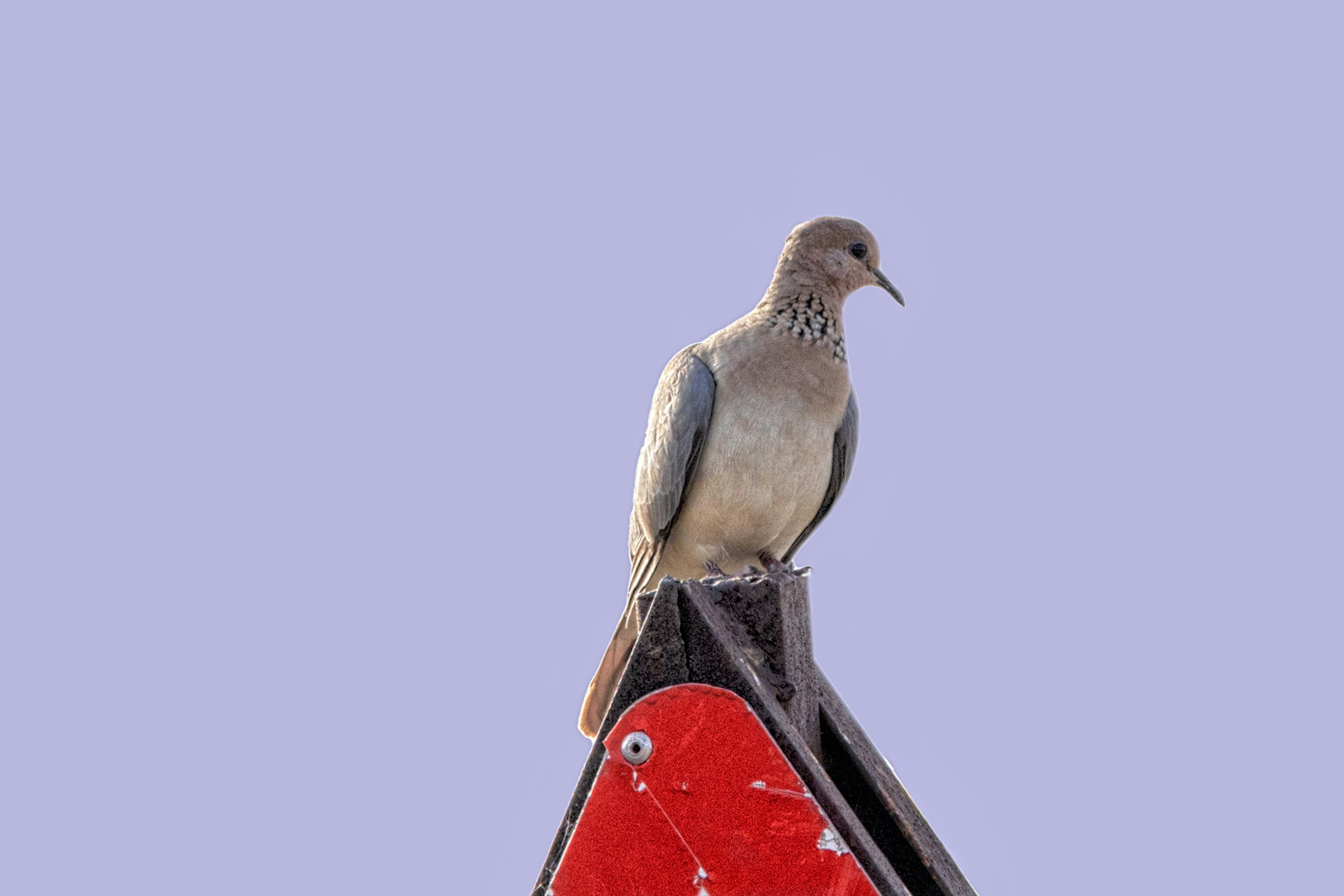
Russia’s renewed investment in animal-based surveillance systems marks a significant technological and ethical turning point in intelligence gathering practices. Russian company Neiry recently claimed that it had successfully implemented pigeons with neural electrodes and equipped them with solar-powered backpacks that can be remotely guided to conduct reconnaissance or long-term monitoring missions (Руслана, 2025). This can reportedly occur while retaining naturalistic flight behavior, which avoids detection from the ground (ibid.). The company claims that the PJN-1 biodrone pigeon project can be directed by uploading flight missions, with near-unlimited operational endurance, high safety, and low cost. The system is designed for infrastructure monitoring, environmental surveillance, and potentially security-oriented reconnaissance, offering UAV capabilities on a live animal (Neiry, 2025).
According to Neiry, the PJN-1 works by surgically implanting a neurochip into the pigeon’s brain, allowing for neurological stimulation to direct the bird in a given direction. Birds are monitored using GPS, eliminating the need for costly training as seen with other working animals. Founder of the Neiry group, Alexander Panov, recently stated that “The solution currently only works for pigeons, but any bird could be used as a carrier. Crows are planned for carrying larger payloads, seagulls for coastal monitoring, and albatrosses for larger offshore areas” (Neiry, 2025).
The use of animals for intelligence is nothing new for Russia, as satellite intelligence has confirmed that Russia deploys military-trained dolphins at its Sevastopol Black Sea base, where dolphin units help detect enemy divers and mines (Turner, 2022). UK intelligence reached similar conclusions regarding Russia’s use of “spy dolphins” as layered defensive assets around Crimea (Roth, 2023). These recent developments echo Cold War–era sentiments and raise questions about compliance with international norms, the militarization of sentient beings, the scalability of neurological implants, and the absence of a binding doctrine in international law restricting such practices.
Case Studies of Animals for Surveillance and Military Use
While the claimed recent developments of biodrones may seem novel, the militarization of animals is not new and has historical roots, for example, seen in both the United States and the Soviet Union. A notable American example is the CIA’s pigeon program, which involved strapping lightweight cameras to the birds for reconnaissance purposes. This program proved that pigeons’ mobility, navigational instinct, and ability to blend into human environments made them ideal platforms, long before the development of compact mechanical drones and neurological implants (CIA, 2024). Another is the Acoustic Kitty program, launched in 1964, which aimed to attach listening devices to cats for operatives to gather intelligence without detection. However, the project was ultimately discontinued due to a lack of control over the animals (CIA, 2024).
Similarly, stemming from a Soviet-era program, the Russian military used specially trained dolphins in the Black Sea to detect underwater mines and enemy assets using natural sonar capabilities. These tactics made headlines in 2019, when Norwegian fishermen discovered a beluga whale wearing a harness linked to Russia. While it is impossible to claim that this animal was trained for surveillance, the case nonetheless raises suspicion. In 2023, British intelligence claimed that Russian marine mammal assets had increased near Sevastopol. To quote, “Imagery shows a near doubling of floating mammal pens in the harbor, which highly likely contain bottlenose dolphins… Russia has trained animals for a range of missions, but the ones housed in Sevastopol harbor are highly likely intended to counter enemy divers” (Roth, 2023). As Russia continues to expand its use of marine mammals for military purposes, these developments inevitably invite comparison with the United States’ own longstanding marine mammal programs.
The United States actively maintains a marine mammal program for military purposes. These animals are trained to detect explosive mines, enemy divers, and manned or unmanned submarine vessels (Vergun, 2025). For example, California sea lions and bottlenose dolphins are used to protect submarines and underwater strategic assets (Vergun, 2025). According to one trainer, “The mammals can retrieve all sorts of stuff like lost equipment or potentially hazardous materials that could pose a threat to security. (...) Sometimes the dolphins and sea lions and their handler team up to do these tasks” (Vergun, 2025).
Unethical Case Studies
Two of the most controversial cases of animal use stem from World War II. In the Pacific Theater, the Americans developed Project X-ray, which sought to attach incendiary devices to bats. The intention was for the bats to roost in wooden structures on mainland Japan and, once a timer was activated, detonate. Although this project was never fully operationalized and never saw use, the intent remains (Air Force Flight Test Center, 2021). Another case involves the Soviet Union, which reportedly used dogs for anti-tank operations. Dogs were fitted with explosive devices and trained to run under tanks, resulting in the death of both the dog and the tank crew (Egorov, 2018). Both instances highlight the unethical nature of using animals in war, as well as treating sentient beings as disposable assets.
Current Implications
In light of accelerating technological progress driven by the war in Ukraine and the longstanding military exploitation of animals, it seems evident that neurochip development will extend far beyond their claimed use in pigeons. Neiry has stated that it plans to continue developing the technology for larger animals, and while the primary purpose is for surveillance, the danger of dual-use applications remains. With historical uses of animals in warfare and the current deployment of marine mammals, larger birds could be used to replace UAV systems in select circumstances.
While this concept may appear rooted in science fiction, it is entirely plausible, assuming both the scalability and credibility of Neiry. Many advancements from Ukraine related to UAV systems have focused on detection, jamming, and interception. Whether pigeons are used for reconnaissance or larger birds for delivery tasks, birds remain inconspicuous to tracking mechanisms. A pigeon could, hypothetically, be deployed far from the frontline and, over many days, navigate through the region, avoiding detection and jamming capabilities. Additionally, neurochips remove the need for conventional training, reducing cost and time while increasing mission consistency. Lastly, history points to humans using animals as expendable assets in war, a pattern that may persist as states seek new tactical advantages, particularly as global geopolitical tensions rise.
Ethics
The use of animals in military and intelligence applications raises clear ethical concerns, which become even more pronounced when considering systems such as the claimed PJN-1 biodrone pigeon. Unlike traditional working animals that retain natural behaviors shaped by training, biodrones rely on neurological implants that directly stimulate the brain to induce specific actions. This effectively removes the animal’s agency and transforms it into a controllable platform. Given that international humanitarian law does not grant animals legal status beyond that of property or objects, there is no established framework addressing the ethics of overriding an animal’s neurological functions for military purposes (Peters et al., 2022).
These concerns are not solely theoretical. They are built on a long pattern of military institutions treating animals as expendable resources. Historical examples, such as the aforementioned Soviet anti-tank dogs, the American bat bomb project, and various CIA programs, demonstrate a willingness to place animals directly in harm’s way. Even in modern programs, such as U.S. and Russian marine mammal units, animals operate in environments where they may be injured, stressed, or exposed to hazardous conditions. Although such programs emphasize animal welfare, they fundamentally rely on deploying sentient beings into dangerous situations.
Current proposals such as the Faunacide Convention and the Non-Militarization of Animals Treaty (NMAT) reflect growing recognition that existing norms are inadequate (Walt-Rose, 2025). These initiatives argue that animals should not be weaponized or instrumentalized in war. As neurotechnology becomes more affordable and reliable, deployment of such systems becomes increasingly likely. Without updated doctrines or enforceable agreements, animals may continue to be used in increasingly invasive ways, raising serious ethical questions about the limits of military innovation and human responsibility towards non-human life.
Recommendations
First, international humanitarian law should be updated to explicitly address the use of animals in intelligence and military operations, particularly in cases involving neurological implants or technological control. Current legal frameworks predate biodrone development and offer no guidance on whether states may surgically alter or remotely operate animals for reconnaissance or kinetic missions. Establishing clear limits, such as prohibiting neurological manipulation of animals for military purposes, would modernize existing law and prevent further exploitation.
Second, international institutions should develop unified doctrines restricting the operational use of neurologically controlled animals in surveillance and targeting roles. There is currently no policy governing the use of live animals on the battlefield. Given the historical trajectory of animal militarization and rapid advances in unmanned systems, formal guidance is necessary to discourage reliance on animals when alternatives exist. Such a doctrine would establish a normative standard for responsible military conduct and reduce the incentive to develop biodrone systems.
Finally, the international community should support proposals such as the Faunacide Convention and the NMAT. These frameworks seek to treat animals as protected entities rather than expendable assets in conflict. They call for banning weaponized animals, the disguising of weapons as animals, and the placement of sentient beings in predictable danger. Although still emerging, adoption would create an ethical foundation that reflects modern warfare and dual-use risk. Closing existing gaps would help prevent the unchecked evolution of neuro-implanted animal systems.
Conclusion
Russia’s renewed investment in animal-based surveillance systems, combined with claimed advances in neurotechnology and longstanding patterns of exploiting sentient beings, suggests that biodrones and military animals will likely expand in use unless policy responses emerge. International law must adapt to technological realities before the practice becomes normalized.
Bibliography
Air Force Flight Test Center. 2021. “May 2, 1943: A Team Headed by Dr. Lytle Adams Arrived to Conduct Air Drop Tests on Canist.” Air Force Test Center. May 2, 2021. https://www.aftc.af.mil/News/On-This-Day-in-Test-History/Article-Display-Test-History/Article/2555256/may-2-1943-a-team-headed-by-dr-lytle-adams-arrived-to-conduct-air-drop-tests-on/.
Central Intelligence Agency. 2024. “Natural Spies: Animals in Espionage - CIA.” Www.cia.gov. April 22, 2024. https://www.cia.gov/stories/story/natural-spies-animals-in-espionage/.
Egorov, Boris. 2018. “Why Did the Soviets Use ‘Suicide’ Dogs to Blow up Nazi Tanks?” Russia Beyond. August 22, 2018. https://www.rbth.com/history/329005-soviets-used-suicide-dogs.
Gala, Shalin G., Justin R. Goodman, Michael P. Murphy, and Marion J. Balsam. 2012. “Use of Animals by NATO Countries in Military Medical Training Exercises: An International Survey.” Military Medicine 177 (8): 907–10. https://doi.org/10.7205/milmed-d-12-00056.
Neiry. 2025. “Neiry представляет птиц-биодронов.” Neiry.ru. 2025. https://neiry.ru/news/tpost/h76nygaa01-neiry-predstavlyaet-ptits-biodronov.
Peters, Anne, and Jermone De Hemptinne. 2022. “Animals in War: At the Vanishing Point of International Humanitarian Law.” International Review of the Red Cross. June 2022. https://international-review.icrc.org/articles/animals-in-war-at-the-vanishing-point-of-international-humanitarian-law-919.
Roth, Andrew. 2023. “Russia Stepping up Security at Black Sea Base with Spy Dolphins, Says UK Intelligence.” The Guardian. The Guardian. June 23, 2023. https://www.theguardian.com/world/2023/jun/23/russia-security-sevastopol-black-sea-base-spy-dolphins.
Руслана Сивак. 2025. “Голуби-роботы: компания в РФ заявила о запуске управляемых ‘биодронов.’” ТСН.ua. ТСН. November 28, 2025. https://tsn.ua/ru/ato/golubi-raboty-kompaniya-v-rf-zayavila-o-zapuske-upravlyaemyh-biodronov-2967215.html.
Stepan Haftko. 2025. “Russia Is Creating Bio-Drone Pigeons with Neurointerfaces for Remote Flight Control.” Ukrainian National News (UNN). UNN. November 25, 2025. https://unn.ua/en/news/russia-is-creating-bio-drone-pigeons-with-neurointerfaces-for-remote-flight-control.
Turner, Ben. 2022. “Russia Is Using Military-Trained Dolphins in the Black Sea, according to Satellite Images.” Live Science. April 30, 2022. https://www.livescience.com/russians-using-military-dolphins-satellite.
Vergun, David. 2025. “Marine Mammal Program Contributes to National Security.” U.S. Department of War. 2025. https://www.war.gov/News/News-Stories/Article/Article/3785968/marine-mammal-program-contributes-to-national-security/.
Walt-Rose, Brandy W. 2025. “Animal Liberation, Equal Rights, and More: Anniversaries Being Celebrated in 2025.” The Humane Herald. September 23, 2025. https://humaneherald.org/2025/09/23/animal-liberation-equal-rights-and-more-anniversaries-being-celebrated-in-2025/.
About the Author
Samuel Kelly is an American graduate student of Diplomacy and Global Governance at the Brussels School of Governance. His interests include climate security, international trade, and transatlantic relations.
Sam can contacted through the following links:
📧 samuel@napforum.org
🔗 LinkedIn Profile