Executive Summary
In this brief, author YuChen Ding critically examines the geopolitics of the closure of the Strait of Hormuz, including its immediate implications and longer-term consequences for the EU, China and Russia. Recent developments have proven that maritime traffic through the Strait remains unstable due to Iranian authorities exerting control, yet global actors have employed varying tactics to ensure passage, including diplomatic intervention and leveraging Chinese connections. With European countries’ differing priorities and interests, she argues that the EU should engage in negotiation with Iranian counterparts for resuming traffic. As bilateral intervention has proven to be successful for other global actors, fruitful negotiations will benefit EU actors tangibly from both geopolitical and economic standpoints. The EU should remain cautious, and intervene with the possibility that China might seek out Russia for energy supply. She also recommends that the EU re-prioritize its green energy transition agenda to build long term energy resiliency and de-couple from the fragility of oil dependency.
Introduction
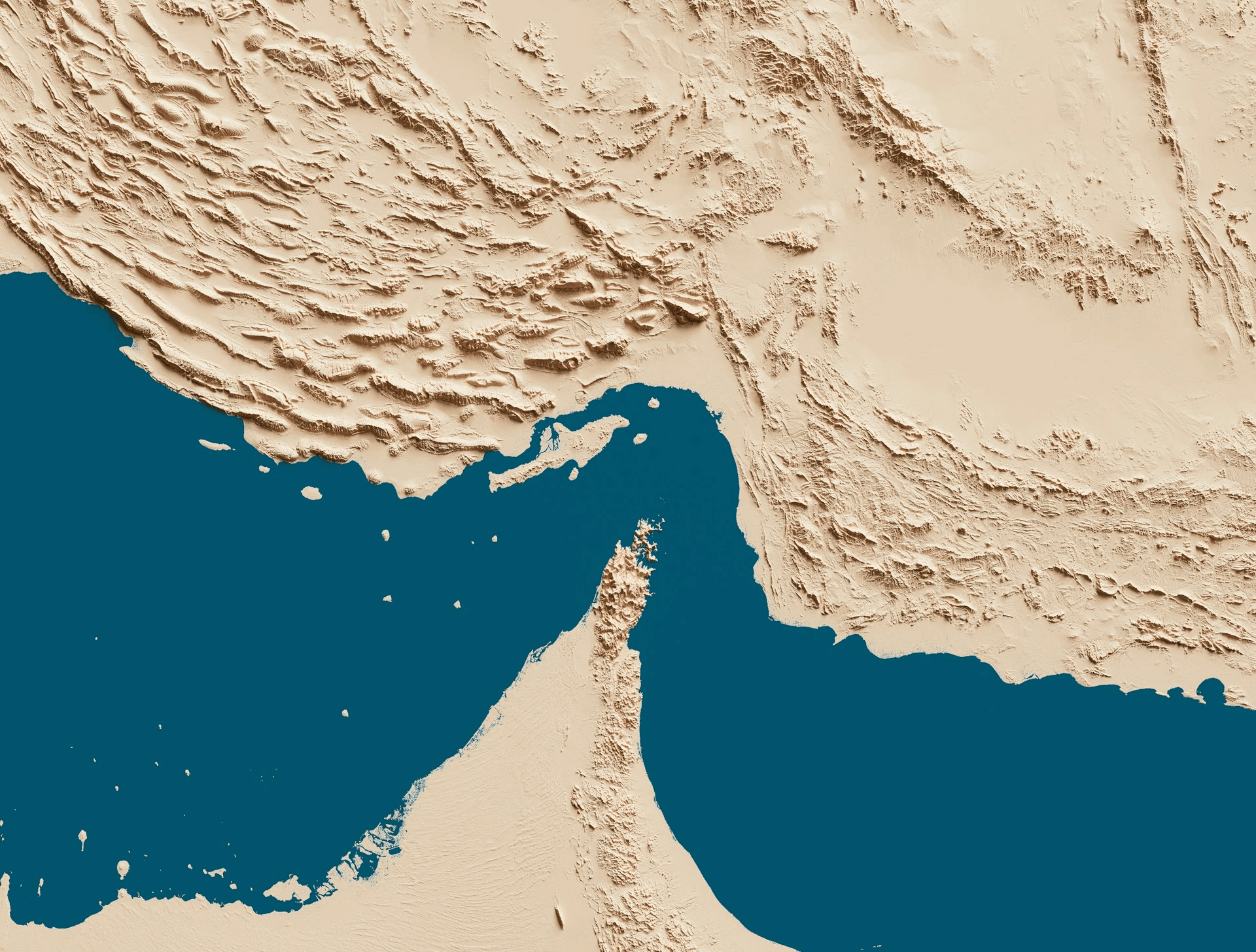
Following the US-Israel joint attacks on Iran, the Strait of Hormuz has been closed to traffic, sending the global economic system into panic. As the 2nd largest oil producer in the Middle East (International Energy Agency 2024), Iran has warned that it will “not let a single liter of oil” pass through the Strait if it is destined for the US and its allies (Kivilcim 2026). Yet, more than a month into the conflict, Iran seems to continue benefitting from its oil export, halting the majority of maritime traffic via the Strait of Hormuz, while allowing selected passage of international vessels.
To understand where the oil is being exported, we must first delineate which ships are currently allowed to pass through the Strait. Global experts specializing in maritime data monitoring–such as Lloyd’s List Intelligence and Kpler, who are considered vital players of global maritime intelligence (World Economic Forum 2026)–have been tracking ships passing through the Strait. They found that about 90 ships passed through the Strait between the 1st and the 15th of March (Meade 2026), compared to an average of 3000 ships passing monthly (Butler et al. 2026). About one third of the ships that passed through the Strait in March had direct links to Iran (Devlin, Edgington, and Ma 2026). Aside from Iranian oil tankers, most ships of international origin have been confirmed to have diplomatic guarantees from Iranian authorities for safe passage.
How have non-Iranian ships gained access to the Strait?
Two main tactics have proven to be successful. The first method of safe passage has been self-identification as Chinese-affiliated to avoid Iranian attacks. Dozens of ships, both oil tankers and commercial transports, have used that method in hopes to be granted safe passage through the Strait (Bao 2026), following unpredictable attacks by the Iranian authorities on over 20 ships of varying origins (Devlin, Edgington, and Ma 2026). The second method involves negotiating with the Iranian authorities. Ships of varying national origins that have been granted access–including Pakistani vessels, Qatari ships carrying liquified natural gas, ships headed to India, as well as a few Greek ships–were also allowed to dock at Iranian ports following negotiations. Asian countries such as Pakistan, India and the Philippines have been in constant talks with the Iranian authorities for their vessels’ safe passage (Chia 2026), as their domestic energy supplies struggle to keep up with demand since the closure of the Strait (Reuters 2026). An increasing number of ships have also disabled their location tracking, essentially “going dark”, to conceal themselves from the Iranian authorities, although not necessarily a safe method.
Why are vessels self-identifying as Chinese?
Since the beginning of the war, Iranian authorities have continued to ship millions of barrels of crude oil to China. This provides essential funding to the Iranian economy and, in turn, to its war efforts against the US and its allies. Iran and China have long kept cordial relations, based on a mutual desire to challenge US hegemony (Scita 2022). A Yuan-crypto based payment system was developed bilaterally to collect payments which secures safe passage for international vessels. (El Wardany et al. 2026). Despite China’s extensive engagement with the green energy transition for the past 10 years, it remains highly dependent on fossil fuel. What is more, 45% of its oil supply comes from Iranian sources (C. Jones 2026). This helps explain why disruptions of the Strait have been troubling Beijing. Subsequently, reports show that China is engaging in diplomatic negotiations with the Iranian authorities to secure the strategic opening of the Strait (Saul and Rashad 2026). Given the fact that the majority of ships self-identifying as Chinese have faced little to no issues during their passage, it is safe to say that Iran is at least hesitant to interfere with its largest trading partner (US-China Economic & Security Review Commission 2026). This is especially true in such precarious times, as Iran is dependent on China’s economic support for its survival in the war, while China remains unwilling to take tangible steps to intervene militarily due to the principle of non-interference of its foreign policy (Helmy 2026). With global crude oil prices artificially inflated, China finds itself in a difficult position regarding the sustainability of its own oil consumption, despite its strategic oil reserve reportedly sufficient for the next three months.
European ships, on the other hand, have made cautiously optimistic progress through the Strait. Several Greek-origined oil tankers and a French container ship have made safe passage in recent days (Lee and Soon 2026). The French-owned vessel was able to evade danger by switching off its transponder (Almeida 2026), which is normally a safety device emitting vessel data. They are in a precarious position compared to their Chinese counterparts. European leaders have largely expressed disinterest in actively engaging in this conflict, initiated by the US and Israel alone: France and Germany are taking a self-preserving position of non-intervention unless their strategic interests are threatened (Gozzi 2026, Nöstlinger 2026), the UK leadership has been attempting to apply economic pressure on Iran,without utilizing its military force (Khalil 2026) and Spanish president Pedro Sanchez condemned the war altogether as violation of international law (Hedgecoe 2026), rejecting Trump’s request to utilize the joint US-Spanish base for its war efforts (S. Jones 2026). It is safe to say that European leaders are not showing the kind of solidarity that the Trump administration was expecting (Irish and Holland 2026), as he hastily threatens an American departure from NATO. The European Union responded by issuing a ‘strongly worded’ condemnation of Iranian offensive military action following the start of the war (Council of the European Union 2026), notably failing to address Washington’s warmongering and reflecting the contradictory priorities of its member states. As of now, European leaders and institutions remain on the sidelines rather than participating in Trump’s aggression, a strategically sound approach compared to charging headfirst into the Strait of Hormuz. As the institution of the European Union could exert significant influence as a unified economic power (European Union 2025) rather than a geopolitical one. Member states have differing geopolitical priorities out of self-interests, which is another reason why the EU's power lies outside of its geopolitical might.
What are the likely next-steps for global actors?
It is likely that China will try to resume its usual relationship with Iran, with high chances of success. Global sanctions against the Iranian regime–led by the US, EU and other Western partners–have been ongoing for decades (US Department of State 2024, European Council 2024, Government of Australia 2025), essentially blocking Iran out of the US-led global trade system. China has been a stable economic partner of Iran, especially in the field of energy and weaponry. On the one hand, given the escalation of war and that the US and European states are unlikely to relax restrictive economic measures, Iran's reliance on its trade relations with China in order to survive the war is rapidly increasing. On the other hand, China is one of the biggest oil consumers in the world (Worldometer 2025). The partnership between the two countries is rooted in codependency, driven by necessity. In the meantime, China will seek alternative sources of energy, most likely from its northern, resource-abundant neighbor Russia. The vast energy transport infrastructure between China and Russia makes this solution the one that requires the least logistical effort.
A dragged out war in Iran will not bode well for Europe and its allies. Europe has already suffered a setback with the fast increase of energy prices, the shock has hindered its green transition agenda once more, including reigniting the debate of Emissions Trading System (Crawford 2026). In the meantime Russia has let out word that there are plenty of buyers for its liquified natural gas (Reuters Staff 2026), likely referring to China. If China turns to Russia to compensate for its loss in fuel provision, it will undoubtedly boost the Russian economy. It is of strategic importance to stop new sources of economic empowerment that could potentially prolong the invasion of Ukraine. The EU should make tangible efforts to restore the maritime traffic flow of the Strait, both for its own economic security and to prevent China from funding Russia’s war in Ukraine any further.
Drawing on the insights provided in this brief, two urgent policy measures are recommended for EU leaders:
Addressing the long term fossil fuel dependency of the EU.
A serious increase of economic and political investment in the green transition agenda needs to be made, specifically by urging national governments in their compliance to the Fit for 55 Agenda. Accelerating energy transition policies will increase EU member states’ energy resilience by fast-tracking the de-coupling processes from fossil fuel dependency. This strategy is designed with energy independence and sustainability in mind, as it will contribute to both EU geopolitical security and environmental protection priorities.
Establishing closer diplomatic contact with the Iranian government to solve the immediate issue of the passage of European ships through the Strait.
It is clear that the global reliance on the Strait of Hormuz proves to be a point of contention for trade, energy and general economic activity. Based on the experience of other countries engaging with the Iranian authorities, there appears to be potential for constructive outcomes through increased dialogue between EU countries and the Iranian authorities. This measure would solve the immediate issue of vessel passage, allowing the flow of energy and goods to be resumed and decreasing the temptation to turn to Russia for energy provision. Past EU-Iran relations have been strained due to varying historical and geopolitical developments, but this should not hold EU leaders back from solving the urgent issues which impact the EU’s social and political outlook in the near future.
In short, EU leaders, both on the national and institutional levels, need to act fast. First, by upscaling the energy resiliency of the continent through accelerating the green transition and the prevention of the economic empowerment of rival states like Russia in the long term. Second, by addressing the immediate energy shortage issues through the opening of direct diplomatic dialogues with Iranian authorities, in an effort to secure safe EU-operated vessel passage .
Bibliography
Almeida, Lauren. 2026. “Several Vessels, Including French Container Ship, Pass through Strait of Hormuz.” The Guardian, April 3, 2026. https://www.theguardian.com/world/2026/apr/03/french-owned-ship-japanese-tanker-pass-through-strait-of-hormuz-iran-war.
Bao, Anniek. 2026. “Traffic Is Trickling through Strait of Hormuz: Who’s Moving and Who’s Stranded.” CNBC, March 18, 2026. https://www.cnbc.com/2026/03/18/hormuz-bottleneck-vessel-tanker-tracker-shipping-strait-of-hormuz.html
Butler, Gavin, Toby Mann, Patrick Jackson, and BBC Persian. 2026. “Why the Strait of Hormuz matters so much in the Iran war.” BBC News, April 6, 2026. https://www.bbc.com/news/articles/c78n6p09pzno.
Chia, Osmond. 2026. “Trump's deadline looms but Asian nations already have deals with Iran.” BBC, April 6, 2026. https://www.bbc.com/news/articles/c79jqx1xdy9o.
Council of the European Union. 2026. “Statement by the High Representative on Behalf of the European Union on Developments in the Middle East.” Consilium. March 1, 2026. https://www.consilium.europa.eu/en/press/press-releases/2026/03/01/statement-by-the-high-representative-on-behalf-of-the-european-union-on-developments-in-the-middle-east/.
Crawford, Anna. 2026. “European Leaders Debate ETS While the Energy Crisis Burns Elsewhere.” European Policy Centre. March 20, 2026. https://www.epc.eu/publication/european-leaders-debate-ets-while-the-energy-crisis-burns-elsewhere/.
Devlin, Kayleen, Tom Edgington, and Yi Ma. 2026. “Nearly 100 ships pass the Hormuz Strait - who is getting through?” BBC, March 20, 2026. https://www.bbc.com/news/articles/c4geg0eeyjeo.
El Wardany, Salma, Alex Longley, Weilun Soon, and Serene Cheong. 2026. “Secret Codes and Yuan Fees Get Ships through Iran’s Hormuz Tollbooth.” Bloomberg. April 1, 2026. https://www.bloomberg.com/news/articles/2026-04-01/strait-of-hormuz-ships-paying-iran-yuan-and-crypto-tolls-for-safe-passage?embedded-checkout=true.
European Council. 2024. “EU Sanctions against Iran.” Consilium. Accessed April 12, 2026. https://www.consilium.europa.eu/en/policies/sanctions-against-iran/.
European Union. 2025. “Achievements and Benefits.” European Union. Accessed April 12, 2026. https://european-union.europa.eu/principles-countries-history/achievements_en.
Government of Australia. 2025. “Iran Sanctions Framework.” Australian Government Department of Foreign Affairs and Trade. 2025. https://www.dfat.gov.au/international-relations/security/sanctions/sanctions-regimes/iran-sanctions-framework.
Gozzi, Laura. 2026. “‘Be Serious... Don’t Speak Every Day’: Macron Criticises Trump Approach to Iran War.” BBC, April 2, 2026. https://www.bbc.com/news/articles/cevk0e4ykwko.
Hedgecoe, Guy. 2026. “Spain’s Pedro Sánchez Hits Back at Trump Threat to Sever Trade Saying ‘No to War.’” BBC, March 4, 2026. https://www.bbc.com/news/articles/c93wwq1n542o.
Helmy, Nadia. 2026. “How China Is Securing Its Alliance with Iran’s New Power Structure.” Modern Diplomacy. March 1, 2026. https://moderndiplomacy.eu/2026/03/01/how-china-is-securing-its-alliance-with-irans-new-power-structure/.
Ho-him, Chan, and Sheikh Saaliq. 2026. “About 90 ships cross the Strait of Hormuz as Iran exports millions of barrels of oil despite the war.” AP News. March 18, 2026. https://apnews.com/article/ships-iran-oil-china-us-trump-hormuz-82a9acb473837f1bf7a821d0c3f95205.
International Energy Agency. 2024. “Iran - Countries & Regions.” IEA. Accessed April 12, 2026. https://www.iea.org/countries/iran/oil.
Irish, John, and Steve Holland. 2026. “Trump Threatens NATO Exit, Scaling up Tensions with Allies.” Reuters, April 1, 2026. https://www.reuters.com/business/aerospace-defense/trump-threatens-nato-exit-scaling-up-tensions-with-allies-2026-04-01/.
Jones, Callum. 2026. “China Has Been Preparing for a Global Energy Crisis for Years. It Is Paying off Now.” The Guardian, March 20, 2026. https://www.theguardian.com/world/2026/mar/20/china-oil-reserves-global-energy-crisis.
Jones, Sam. 2026. “Spain Denies US Permission to Use Jointly Operated Bases to Attack Iran.” The Guardian, March 2, 2026. https://www.theguardian.com/world/2026/mar/02/spain-denies-united-states-permission-military-bases-iran-pedro-sanchez.
Khalil, Hafsa. 2026. “UK and Allies Discuss Sanctions to Stop Iran Blocking Strait of Hormuz.” BBC, April 2, 2026. https://www.bbc.com/news/articles/cx2d0md89v2o.
Kivilcim, Elvan. 2026. “Iran Says No Oil Benefiting U.S., Allies Will Pass through Strait of Hormuz.” The Wall Street Journal, March 11, 2026. https://www.wsj.com/livecoverage/us-israel-iran-war-2026/card/iran-says-no-oil-benefiting-u-s-allies-will-pass-through-strait-of-hormuz-I4xl2SLRfuq6iRUK5vKq.
Lee, Julian, and Weilun Soon. 2026. “Three Oil Supertankers Appear to Make Move through Hormuz Strait.” Bloomberg. April 11, 2026. https://www.bloomberg.com/news/articles/2026-04-11/three-oil-supertankers-appear-to-make-move-through-hormuz-strait?embedded-checkout=true.
Lo, Bobo. 2025. “Convergence and Divergence: China-Russia Relations in the Age of Trump.” New Eurasian Strategies Centre. July 3, 2025. https://nestcentre.org/china-russia-relations-in-the-age-of-trump/.
Meade, Richard. 2026. “Shadow Fleet Dominates Hormuz Crossings as Iran Ramps up Bypass Loadings.” Lloyd’s List. March 9, 2026. https://www.lloydslist.com/LL1156563/Shadow-fleet-dominates-Hormuz-crossings-as-Iran-ramps-up-bypass-loadings.
Nöstlinger, Nette . 2026. “Germany to Trump: We Won’t Help You Reopen the Strait of Hormuz.” POLITICO, March 16, 2026. https://www.politico.eu/article/germany-to-trump-this-not-nato-war-strait-hormuz-iran/.
Reuters. 2026. “Philippines Launches $333 Million Fund to Boost Fuel Security.” Reuters, March 26, 2026. https://www.reuters.com/business/energy/philippines-launches-333-million-fund-boost-fuel-security-2026-03-26/.
Reuters Staff. 2026. “Kremlin Says EU’s LNG Plan Is Self-Defeating, Russia Will Find New Markets.” Reuters, March 20, 2026. https://www.reuters.com/business/energy/russia-says-it-will-shift-new-markets-its-lng-eu-shooting-itself-foot-2026-03-20/.
Saul, Jonathan, and Marwa Rashad. 2026. “China in Talks with Iran to Allow Safe Oil and Gas Passage through Hormuz, Sources Say.” Reuters, March 5, 2026. https://www.reuters.com/business/energy/china-talks-with-iran-allow-safe-oil-gas-passage-through-hormuz-sources-say-2026-03-05/.
Scita, Jacopo. 2022. “Implementing the China-Iran Comprehensive Strategic Partnership: Not so Fast.” Arab Gulf State Institute. April 12, 2022. https://agsi.org/analysis/implementing-the-china-iran-comprehensive-strategic-partnership-not-so-fast/.
UK Prime Minister Office. 2026. “Joint Statement from the Leaders of the United Kingdom, France, Germany, Italy, the Netherlands, Japan and Canada on the Strait of Hormuz: 19 March 2026.” GOV.UK. March 19, 2026. https://www.gov.uk/government/news/joint-statement-from-the-leaders-of-the-united-kingdom-france-germany-italy-the-netherlands-and-japan-on-the-strait-of-hormuz-19-march-2026.
US Department of State. 2024. “Iran Sanctions.” United States Department of State. December 30, 2024. https://www.state.gov/iran-sanctions.
US-China Economic & Security Review Commission. 2026. “China-Iran Fact Sheet.” Uscc.gov. 2026. https://www.uscc.gov/research/china-iran-fact-sheet-short-primer-relationship.
World Economic Forum. 2026. “Kpler.” World Economic Forum. 2026. https://www.weforum.org/organizations/kpler/.
Worldometer. “China Oil Reserves, Production and Consumption Statistics 2025.” Worldometer. Accessed 12 April, 2026. https://www.worldometers.info/oil/china-oil/.
About the Author
Hailing from Beijing to Baltimore and currently based in Brussels, Yuchen Ding is a globally minded young professional contributing to research in international relations. She has a background in examining geostrategic issues among the EU, China, and the US. She has experience working in Brussels-based public affairs roles across peacebuilding, feminist advocacy, and now security and defense issues.