
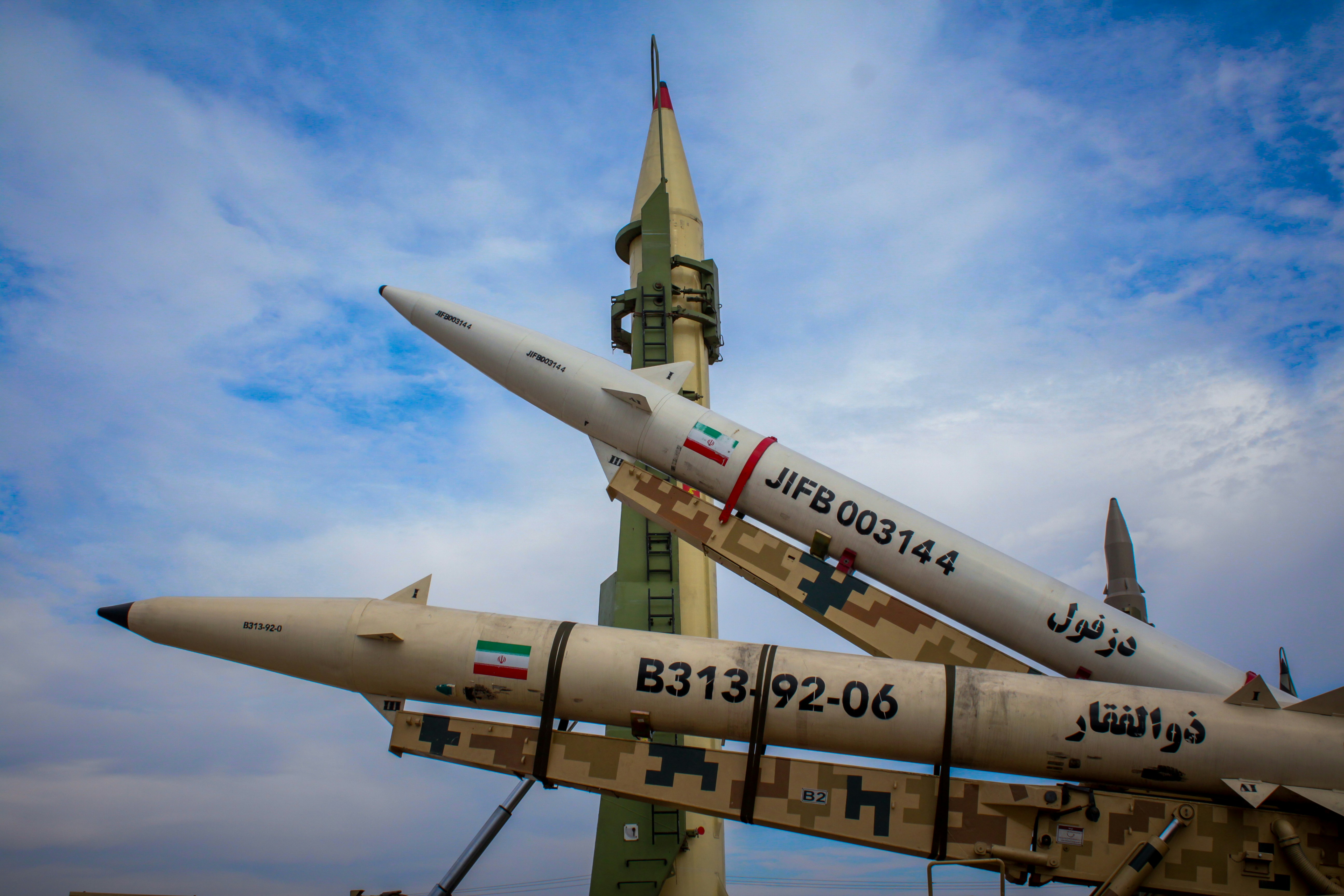
Starting on 28 February 2026, the United States and Israel launched operations “Epic Fury” and “Lion’s Roar”, respectively targeting various military sites in the Islamic Republic of Iran and eliminating its leader, Ayatollah Khaminei. This led to retaliatory strikes on Israel, as well as on US bases in Iraqi Kurdistan, Bahrain, Kuwait, Qatar, Saudi Arabia, Oman, and the UAE. Additionally, two missiles were intercepted by NATO in Turkish airspace. In attacking Tehran’s government against the advice of the Gulf monarchies, the Trump and Netanyahu administrations are aiming to end the Islamic regime’s nuclear program, destroy its ballistic missile capabilities, and weaken its support of terrorist proxies throughout the Middle East; while potentially evoking a regime change.
Unsurprisingly, concerns about the Iranian nuclear and ballistic missile programs are shared by the other 31 NATO allies, who, already at the 2023 Vilnius Summit, condemned Iran’s support for Russia’s war in Ukraine–through, inter alia, its infamous Shahed drones–(NATO 2023; Cakirozer 2025). The variety of reactions in the transatlantic alliance, ranging from praise by Germany’s Chancellor Merz to condemnation by Spain and Turkey, evokes the question: how do the American-Israeli operations launched on 28 February 2026 against the Islamic Republic affect NATO’s internal cohesion? This paper will endeavor to answer this question by assessing NATO members’ different views on how to deal with the Islamic Republic, their diverging approach to Kurdish autonomy, the war’s effect on energy prices for allies, and respective allied weapons stockpiles.
NATO’s Views on dealing with the Islamic Republic
The United States’ Republican-dominated Senate voted 47 to 53 rejecting a motion to withdraw all US forces engaged in hostilities with Teheran’s theocracy, with Senator Fetterman being the only Democrat to join Republicans in supporting the war effort (US Senate 2026). As illustrated by the June 2025 Operation Midnight Hammer, which targeted Iranian nuclear installations and ended the Twelve Day Iran-Israel War, the US is effectively divided along party lines, with Republicans favoring a military solution to the ‘Iranian threat’.
However, Germany, despite Merz’s words of support at the first White House visit of a foreign leader since Operation Epic Fury started, already seems more divided. The German Foreign Minister, Wadephul, of the conservative CDU with Chancellor Merz, had labelled Operation Midnight Hammer in 2025 as “regrettable” before being ‘corrected’ by Merz, who countered that there was “nothing to regret” (ZDF 2025). As such, it is not difficult to imagine what Wadephul’s personal views may be on the current large-scale American-Israeli operation. Moreover, Germany’s Defense Minister Pistorius, a Social Democrat (SPD), meanwhile urged a diplomatic path. This showcases Merz’s relative isolation as the CDU’s ‘hawkish’ faction remains a minority in his own government. Thus, the Federal Republic historically favors a diplomatic solution pertaining to Iran, despite its current Chancellor voicing support for the military operation.
France’s President Emmanuel Macron, by contrast, described the US strikes as “outside of international law”, nonetheless dispatching its Charles de Gaulle aircraft carrier to defend allies from Iranian rocket attacks in the region (Brice and van Campenhout 2026). France therefore balances its strategic interests, including its military base in Abu Dhabi, with a claimed historical affinity for international law. This results in France similarly viewing diplomacy as a preferred option to contain the Islamic Regime.
Madrid’s explicit condemnation of the US-Israeli strikes as “reckless” puts Spain together with Turkey as one of two allies condemning the operation against the Islamic Republic, prohibiting DC from using the jointly operated bases at Rota and Morón for operations against Iran (Latona and Waldersee 2026). In the case of Spain’s left-wing government, this comes to no surprise considering the administration:
blocked the designation of the Islamic Revolutionary Guard Corps (IRGC) as a terrorist organization until January 2026
refused to commit to spending 5% of GDP on defense at the 2025 NATO Summit
opposed the US arrest of Venezuelan President Maduro
and Minister Sira Rega’s support for Hamas’ supposed “right to resist” on 7 October 2023 (Friedman 2023).
Similar positions are adopted by Ankara, with Turkey equally preferring a diplomatic solution, though partially for different reasons. Given that the only organized armed opposition groups in Iran are Kurdish political parties, Ankara’s primary interest remains to prevent a second arrangement of Kurdish autonomy, as seen in Iraqi Kurdistan. This is to avoid momentum for Syrian Kurds, and eventually, Turkish Kurds to obtain autonomy or even secede from its national territory (Porter 2026). As such, it comes natural to share condemnation of the US-Israeli attacks while refraining from condemning tens of thousands of killed civilians across Iran during the January 2026 protests.
The Kurds: World’s Largest Nation without a State
Turkey’s unique positioning as the country with the largest ethnically Kurdish population (roughly 19 million people, which represents around 25% of the country’s total population, and around half of all Kurds across the region) puts it at odds with any intervention destabilizing its neighboring countries with significant Kurdish populations. After a government offensive in early 2026 captured around 80 % of the territory previously administered by the Kurdish‑led Autonomous Administration of North and East Syria, a US-brokered ceasefire was agreed in late January. This stipulated withdrawal of front‑line forces, transfer of the control of key cities, institutions, oil and gas fields to Damascus, and a phased integration of SDF military and administrative structures into Syrian state institutions rather than outright elimination of local governance. Considering reports at the beginning of March 2026 suggesting that the US was in talks with Iranian Kurdish opposition forces about a potential ground operation, this is where Turkish and American interests collide (Gumrukcu and Chazan 2026).
Up until 2026, the United States was the main ally of the Kurdish-led Syrian Democratic Forces, with Republican Senator Lindsey Graham introducing the “Save the Kurds Act” to Congress (Aftandilian 2026). Moreover, former Secretary of State Mike Pompeo stated in a commentary that the US should respect the 2017 referendum in the Iraqi Kurdistan region where 93% of people voted in favor of an independent Kurdistan (Mohammed 2026). Similarly, Democratic Senators Schumer and Engel have expressed support for independence, with backing of Kurdish autonomy seen in Iraq representing almost bipartisan consensus.
Europeans maintain a middle position, with countries such as France maintaining their historical position of supporting the status quo, meaning Kurdish autonomy only in Iraq, and warning that independence could destabilize the region (Reuters 2017). As a result, any US support for Iranian Kurdish forces could trigger a military response from Turkey, the only NATO ally that considers certain armed Kurdish parties as terrorist groups. Such an indirect confrontation between NATO’s largest and second largest armed forces could render the alliance deeply divided, with many European allies likely remaining sidelined or even backing Turkey’s ‘anti-autonomy’ agenda for Iran.
Energy Prices
Following the closure of the Strait of Hormuz by the IRGC in the context of the American-Israeli attacks, oil prices reached $120 per barrel on 9 March, the highest since 2022, and well above its $80 pre-war price (Vasques 2026). Although decreasing to around $100 the day Trump announced that the US was almost done with its operation, a prolonged war would inevitably evoke stauncher European opposition due to inflationary pressures.
Moreover, increasing energy prices would benefit Russia, and by extension, its war effort in Ukraine, as it increases the gas exporters’ revenues. This could produce more European opposition to prolonging the airstrikes against the Islamic Republic (Reuters 2026). Turkey would logically share these concerns as a net importer of oil and gas, isolating NATO’s most powerful ally, the US, which is a net exporter of petroleum products and is currently attempting a rapprochement with Russia to end the war in Ukraine (USA Facts 2026). Therefore, energy prices represent an additional major point of contention between the United States on the one side, and its European allies and Turkey on the other.
Stockpiles
Finally, European NATO allies, previously pushed by the Trump administration to purchase US weapons to bolster their own arsenals and deliver military aid to Ukraine, are increasingly worried about a prolonged US-Israeli operation against the Islamic Republic due to a potential diversion of weapons and ammunitions from Ukraine to use against Iran (Detsch, Sakellariadis, and Kine 2026). In this context, European deterrence of Russia could be significantly weakened should the war last, implying a rift between European allies who had planned to buy US weaponry and the Americans. Allies directly bordering Russia such as Lithuania would thus “welcome any effort by the administration to incentivize defense companies to get into war mode of production”, as former Deputy Defense Minister Giedrimas Jeglinskas put it (ibidem).
Specifically, concerns are increasing regarding the depleting stock of Tomahawk missiles, naval air defense systems, and Patriot PAC-3 interceptors. This is despite the fact that President Trump announced that various defense contractors including Boeing and Lockheed Martin agreed to quadruple production of certain weapons (Yankovska 2026). Whether this will materialize and suffice to satiate the European allies’ increasing need for weaponry in the face of tensions with NATO’s Eastern neighbor remains to be seen.
Conclusions
To conclude, operations “Epic Fury” and “Lion’s Roar” elucidate the dissimilar strategies of NATO allies in dealing with the Islamic Republic of Iran, with the US favoring military action, most European allies preferring a diplomatic path, as well as Spain and Turkey condemning the military action. As Tehran’s regime funds terror groups around the region chanting and acting upon the slogans “Death to America” and “Death to Israel”, it comes to no surprise that the US adopts a more ‘hawkish’ posture and does not share European allies’ worries about international law.
However, the potential for intra-alliance incohesion derives predominantly from US-Turkey differences regarding the role of the Kurds. Whereas the United States could envision cooperation with various Iranian Kurdish parties in its war effort, the fall of the Islamic Republic for Ankara with the help of Kurdish forces would give momentum to an autonomous Iranian Kurdish region. This would be similar to the arrangement in Iraq, presumably a red line for Ankara. As Turkey views many of the armed Kurdish groups as terror organizations and endeavors to prevent any additional autonomous Kurdish entities to avoid a domino effect leading to Turkish Kurds demanding a similar arrangement, US cooperation with Kurdish parties could put the alliance’s two biggest militaries at odds.
In addition, the IRGC’s closure of the Strait of Hormuz on which many European countries depend for energy imports, and the US’ use of ammunition in the war originally intended to be sold to European allies and Ukraine, could, in the long-term, render European allies opposed to a prolonged United States involvement in Iran.
Bibliography
Aftandilian, Gregori. 2026. “The Shrinking Space for Kurdish Autonomy in Syria.” Arab Center Washington DC, March 1, 2026. https://arabcenterdc.org/resource/the-shrinking-space-for-kurdish-autonomy-in-syria/?utm
Brice, Makini, and Charlotte van Campenhout. 2026. “France Sending Aircraft Carrier to Mediterranean, Macron Says.” Reuters, March 3, 2026. https://www.reuters.com/world/france-sending-aircraft-carrier-mediterranean-macron-says-2026-03-03/.
Cakirozer, Utku. 2025. Iran’s Threat to Regional and Euro-Atlantic Security. GSM Report, Iran’s Threat to Regional and Euro-Atlantic Security, NATO Parliamentary Assembly, September 11, 2025. https://www.nato-pa.int/document/2025-irans-threat-regional-and-euro-atlantic-security-gsm-report?utm.
Detsch, Jack, John Sakellariadis, and Phelim Kine. 2026. “Allies Fear Iran War Will Leave Them Without U.S. Weapons They Bought.” Politico, March 7, 2026. https://www.politico.com/news/2026/03/07/allies-fear-iran-war-will-leave-them-without-u-s-weapons-they-bought-00817204.
Friedman, Gabe. 2023. “Spanish Politician Who on Oct. 7 Said Palestinians Have ‘Right to Resist’ Is Made a Cabinet Minister.” Jewish Telegraphic Agency, November 20, 2023. https://www.jta.org/2023/11/20/global/spanish-politician-who-on-oct-7-said-palestinians-have-right-to-resist-is-made-a-cabinet-minister?
Gumrukcu, Tuvan, and Guy Chazan. 2026. “US Holds Talks with Iranian Kurdish Militants over Anti‑Regime Operations.” Financial Times, March 4, 2026. https://www.ft.com/content/fe0d828d-ef51-4568-b2d7-1c286d464723.
Latona, David, and Victoria Waldersee. 2026. “Spain Defies Trump’s Threats over Stance on Iran War, Says It ‘Won’t Be Vassals.’” Reuters, March 4, 2026. https://www.reuters.com/business/aerospace-defense/spains-sanchez-trump-you-cannot-play-russian-roulette-with-destiny-millions-2026-03-04/.
Mohammed, Dler. 2026. “The Kurds Deserve Better: Pompeo Urges US to Support Kurdish Autonomy.” Kurdistan24, January 12, 2026. https://www.kurdistan24.net/en/story/841522/the-kurds-deserve-better-pompeo-urges-us-to-support-kurdish-autonomy?utm.
NATO. 2023. Vilnius Summit Communiqué. Vilnius, Lithuania: North Atlantic Treaty Organization, July 11–12, 2023. https://www.nato.int/en/about-us/official-texts-and-resources/official-texts/2023/07/11/vilnius-summit-communique.
Porter, Lizzie. 2026. “Explainer: Who Are the Iranian Kurdish Opposition Groups?” The National, March 5, 2026. https://www.thenationalnews.com/news/mena/2026/03/05/explainer-who-are-the-iranian-kurdish-opposition-groups/.
Reuters. 2017. “France Says Iraqi Kurds Against Independence Push, Urges Baghdad Concessions.” Reuters, September 27, 2017. https://www.reuters.com/article/world/france-says-iraqi-kurds-against-independence-push-urges-baghdad-concessions-idUSKCN1C20PD/?utm
Reuters. 2026. “EU Urges US to Strictly Enforce G7 Price Cap on Russian Oil.” Reuters, March 10, 2026. https://www.reuters.com/business/energy/eu-urges-us-strictly-enforce-g7-price-cap-russian-oil-2026-03-10/.
United States Senate. Votes. Accessed March 5, 2026. https://www.senate.gov/legislative/votes_new.htm.
USAFacts. 2026. “Is the US a Bigger Oil Importer or Exporter?” USAFacts, January 8, 2026. https://usafacts.org/articles/is-the-us-a-bigger-oil-importer-or-exporter/.
Vasques, Eleonora. 2026. “L’UE lorgne les réserves de pétrole pour contenir les prix de l’énergie et l’inflation, alors que la guerre en Iran fait rage.” Euronews, March 10, 2026. https://fr.euronews.com/my-europe/2026/03/10/lue-lorgne-les-reserves-de-petrole-pour-contenir-les-prix-de-lenergie-et-linflation-alors.
Yankovska, Dariia. 2026. “Europe Fears Being Left Defenseless as US War in Iran Depletes Stockpiles.” RBC-Ukraine, March 7, 2026. https://newsukraine.rbc.ua/news/europe-fears-being-left-defenseless-as-us-1772904148.html.
ZDFheute. 2025. “US-Angriff in Iran: Wadephul räumt Fehleinschätzung ein.” ZDFheute, June 22, 2025. https://www.zdfheute.de/politik/iran-israel-usa-trump-wadephul-100.html.
About the Author
Elias Schimkat is a German-American MA in International Governance and Diplomacy student at Sciences Po with a specialization in Intelligence, holding a BA in International Studies from Leiden University. He has multiple professional experiences, including with a German Bundestag MP, at NATO SHAPE’s Partnerships Directorate, as well as in bi- and multilateral diplomatic missions. Elias is particularly interested in foreign intelligence operations on allied territory and how NATO’s partnerships with neighboring countries can contribute to transatlantic stability. In his free time, he enjoys learning new languages, playing football/soccer, and going to the gym.
Contact information:
https://www.linkedin.com/in/elias-s-329054732904573250