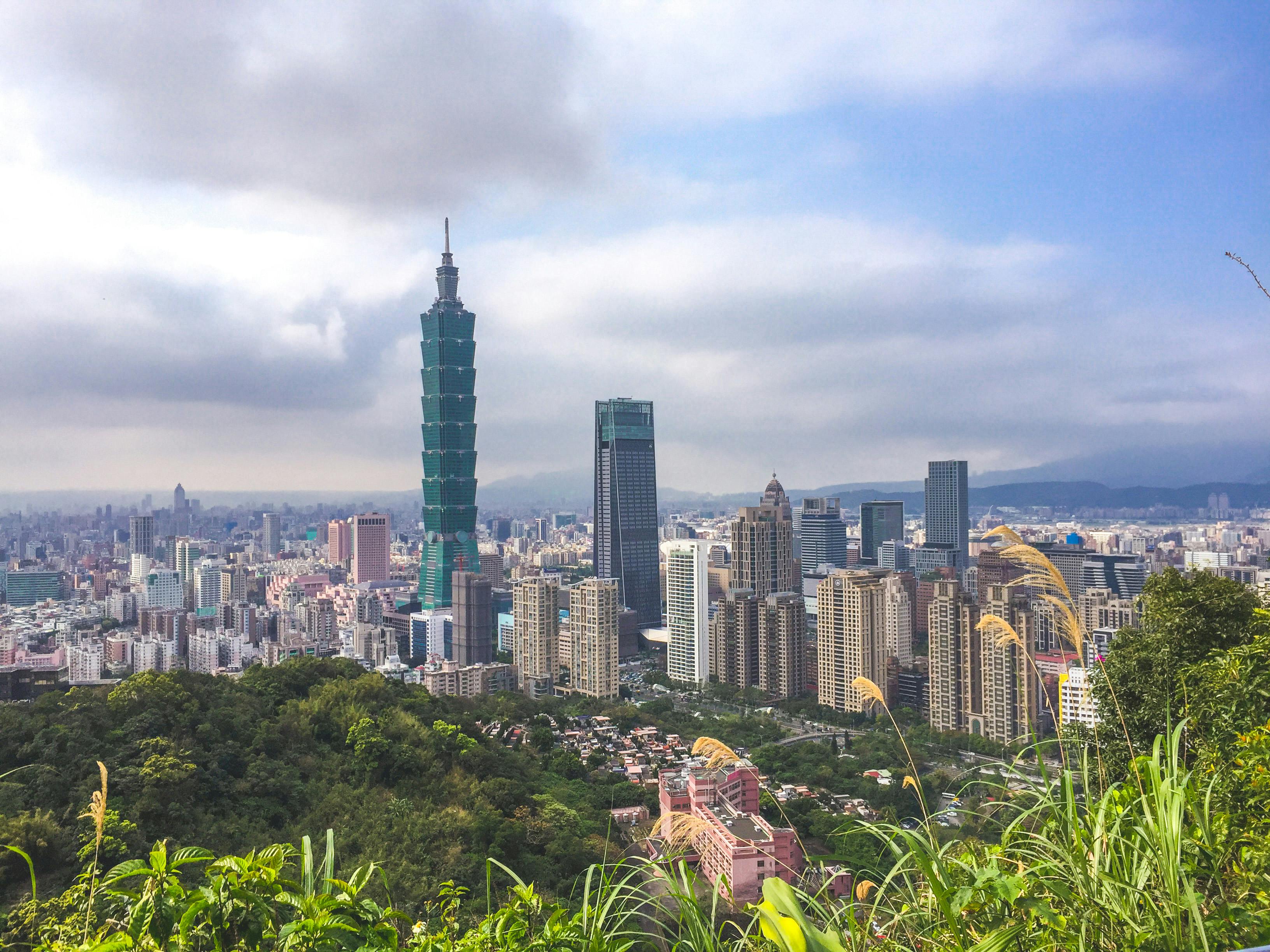
Tensions in the Taiwan Strait are reaching a boiling point. In 2024 alone, China carried out more than 3,000 military incursions into Taiwan’s airspace and ramped up threats of forced reunification (Srimushnam 2024, Chen 2025). For Taiwan — a vibrant democracy and a global semiconductor powerhouse — this is an existential crisis (Wong 2019, Srimushnam 2024).
Taiwan’s latest defence blueprint — the Quadrennial Defence Review — gets some things right, but it’s clear the island needs to fill three urgent gaps: its defence industry is too dependent on others, its cybersecurity is vulnerable, and its asymmetric warfare capabilities are not where they need to be. It is time for Taiwan to double down on four priorities. For the European Union, in light of its own weaknesses and dangers, there are many possible avenues for cooperation and partnership, offering mutual benefits along the way.
1. Ramp up self-reliant arms production through partnerships and expand asymmetric warfare capabilities. The EU can open doors to cutting-edge technology and joint R&D.
2. Make cybersecurity a national mission. Leveraging EU expertise in cyber defence and information security will help Taiwan keep ahead of digital threats.
3. Diversify regional partnerships to avoid over-reliance on the US. The EU, with its growing Indo-Pacific presence, can be a crucial bridge-builder.
The history of the conflict
The People's Republic of China (China) and the Republic of China (Taiwan) have a long history of heightened tensions and confrontation (Breytenbach 1994, Davison 2003). Even though the conflict has been brewing for decades, it has become more serious and dangerous in recent years (Srimushnam 2024). All these provocations are an example of the danger China's 'reunification' policy poses to the small island. Taiwan, which aims to defend its sovereignty and self-governance, has been aware of the threat of war over reunification since the establishment of the de facto nation (Chen 2022). Henceforth, its grand strategy revolves around defending its status quo. It seems logical as the issue of (forced) reunification is the existential threat the nation faces.
The root of the conflict lies decades in the past. In 1912, Sun Yat-sen founded the Republic of China, which is the historical origin of Taiwan (Davison, 2003). In 1949, Mao Zedong's forces won the Chinese Civil War, and consequently, the nationalist troops retreated to the island of Taiwan (and a handful of smaller islands) (Wong 2019). Mao declared the founding of the People's Republic of China, which later became an autocratic, communist State under Xi Jinping, while Taiwan slowly evolved into a Western-oriented democracy (ibid.). Today, only twelve states have official diplomatic relations with Taiwan (Cave 2025). The Taiwanese government now focuses on its status quo of self-governance (Global Taiwan Institute 2022). China, on the other hand, persistently claims that Taiwan is a renegade region and publicly aims to reunify the region with the motherland (Goldstein 2023). Xi Jinping even vowed to do so during this generation - a more assertive stance compared to the customarily communicated aim of reunification until the 100th birthday of the PRC 2049 (Maizland 2025). Taiwan is continuing to pursue a pro-democratic, anti-Chinese orientation. In 2024, the pro-sovereignty and anti-China party, the DPP, won its third consecutive election, marking the first time this has happened in Taiwan (Davidson and Hawkins 2024). Since Taiwan transitioned to democracy, the country has developed into a technological powerhouse, producing 90% of the advanced chips the global technology economy relies on (Srimushnam 2024). Additionally, China, which sits across the Taiwan Strait and is the world's second-largest economy, is increasing its economic, diplomatic, and military influence in the region and worldwide (Council on Foreign Relations 2024). Beginning in 2014, Beijing aggressively suppressed pro-democracy protests in Hong Kong; since then, Taiwan has been cautious and sees Hong Kong as a prominent example of how a potential future under Chinese rule could be (Kang, 2022). Additionally, China has regularly intruded on Taiwanese airspace. For example, it reacted with forceful military drills after Nancy Pelosi visited Taiwan in 2022 (Goldstein, 2023). Moreover, Taiwan interpreted the invasion of Ukraine by its culturally similar yet larger neighbour as another testament to the need to be cautious of China (Pollpeter et al. 2024).
The current reality
Taiwan is now focusing more than ever on its own defensive strategy - and looking for like-minded partners throughout that process (Blanchette and DiPippo, 2025). The prospect of war across the Taiwan Strait was always apparent and possibly devastating. Yet, now, a possible conflict could lead to a global catastrophe. Firstly, Taiwan's chip technology, if destroyed or captured by China, could either make the entire world reliant on China or create an immense recession (Shattuck 2020, Collins and Erickson 2023). Secondly, the 23 million inhabitants of Taiwan overwhelmingly reject Chinese rule, making a possible forced unification bloody (Mainland Affairs Council 2020). Moreover, China is a nuclear power, which sparks concerns about a nuclear conflict that could, if the US decides to protect Taiwan, be fought against another nuclear power. Military strategists believe that such a scenario could ignite a major war between the two biggest economies (Council on Foreign Relations 2024, NBC News 2022).
Taiwan is aware of China's threat. The danger of a conflict is obvious, and since the loss of the Civil War, it has been ever-present for the small island at the shore of mainland China. The Ministry of Defence of Taiwan, in its 2021 Quadrennial Defence Report (QDR), informed the public - and its allies - of a situation that is "becoming more complex and precarious" (The Republic of China 2021, p. 1). The most recent QDR, published in 2021, outlines seven policy points of their grand strategy (ibid.): resolute defense and multi-domain deterrence, development of asymmetric warfare capabilities, enhancement of self-reliant defense and domestic production, strengthening of reserve forces and civil-military integration, safeguarding of critical infrastructure, countering of cognitive and information warfare, and deepening of international and regional partnerships (The Republic of China 2021).
Taiwan’s way forward - how the EU can help and benefit
Taiwan aims for greater self-reliance; nevertheless, establishing a traditional military-industrial complex will take decades, as South Korea's experience shows. Here, the European Union can serve as a valuable partner. The EU’s experience in supporting dual-use technology start-ups and facilitating cross-border innovation can help Taiwan accelerate its domestic arms production.
Developments and production: In practice, Taiwan should refocus away from the original aim and emphasise two alternatives: Firstly, short-term spending for arms deals and joint R&D facilities with allied partners—including EU member states—should be increased, with a specific focus on asymmetric and mobile defence systems (more on that in asymmetrical warfare recommendations). Secondly, encouraging public-private partnerships for advanced manufacturing of small-arms defence, drawing on EU expertise and support programs, would expedite the creation of a vibrant domestic sector. General Lee Hsi-Min, former Minister for Defence, has repeatedly called for investment away from traditional defence systems such as fighter jets and tanks; this can be achieved through targeted investment in private companies, including collaboration with European firms (Dominguez 2023). Shifting the focus from traditional, more expensive machinery to innovative, agile systems also enables a faster, more achievable timeline—which is critical for Taiwan’s urgent defence needs (Wu 2023).
Cybersecurity and misinformation: Most democratic countries struggle to combat hybrid threats. However, Taiwan’s survival partly depends on its ability to defend itself—both now and in the near future. The EU can provide significant added value in this area. Taiwan should leverage EU expertise in cyber defence, information security, and election integrity by pursuing joint training initiatives, technical exchanges, and participation in EU-led cyber capacity-building programs. For example, the EU’s experience in countering disinformation and supporting media literacy can help Taiwan build a resilient cyber ecosystem. To this end, Taiwan needs to establish a high-quality cyber command structure—active even during “peacetime”—to respond to ongoing hybrid threats (Chen 2022). Experiences from both the EU and Ukraine’s ongoing anti-misinformation efforts offer valuable blueprints for educating civil society and countering malign influence (Helmus and Holynska 2024). Democratic countries will be better at defending themselves against misinformation if they build expertise and knowledge hubs, and compare and exchange their experiences.
Regional Partnerships: The war in Ukraine is a wake-up call; relying on a single ally is risky business (Pollpeter et al. 2024, Bigg 2025). Taiwan must broaden its circle of friends. European defence and diplomatic networks can help Taiwan connect with other democracies in the Indo-Pacific, opening the door to tech alliances and potentially security cooperation (Jain 2023, De Castro 2022, Flores and Lema 2025). The EU’s ability to build flexible, informal partnerships is tailor-made for Taiwan’s diplomatic challenges. Even though the EU's new Indo-Pacific Strategy does not include this approach, and the possible Chinese backlash might be intense, Taiwanese survival depends on more friends and smarter alliances.
Taiwan cannot match China tank-for-tank or ship-for-ship. If Taiwan wants to stop an invasion, it needs to think like a porcupine, not a lion. That means investing in a new wave of small, smart, and cheap defence systems that can inflict high costs on any aggressor (Kunertova 2023, Timbie and Ellis 2022).
By learning from Ukraine and working with the EU, Taipei can reinvent its defences—fast —while the EU upgrades its own capabilities. This partnership does not have to reach the highest diplomatic levels, as Western nations are historically reluctant due to the threat of repercussions from China. Cooperation can begin at lower levels, such as private-sector engagement, and then be extended to R&D or manufacturing programs that exchange advances across various fields.
The porcupine strategy, backed by European innovation and real-world cooperation, would make Taiwan a tougher target than ever before. That is how you make an invasion as unattainable as possible and thus keep the island free (Roussi 2024, Hale 2023).
Bibliography
Bigg, M.M. (2025) 'Trump Falsely Suggests Ukraine Is to Blame for the War: What to Know,' The New York Times, 19 February. https://www.nytimes.com/2025/02/19/world/europe/trump-zelensky- ukraine-comments.html.
Blanchette, J. and DiPippo, G. (2025) From strategic ambiguity to strategic anxiety: Taiwan’s Trump challenge. https://www.rand.org/pubs/commentary/2025/03/from-strategic- ambiguity-to-strategic-anxiety-taiwans.html.
Breytenbach, W. (1994) 'The Chinese dilemma: Dual recognition is the ultimate solution,' South African Journal of International Affairs, 2(1), pp. 50–61. https://doi.org/10.1080/10220469409545116.
Cave, D. (2025) 'How Trump Supercharged Distrust, Driving U.S. Allies Away,' The New York Times, 31 March. https://www.nytimes.com/2025/03/31/world/trump-foreign-policy- trust.html.
Chen, K. (2025) Analysts mixed on Chinese ADIZ incursion impact on Taiwan | Taiwan News| Jan.8, 2025 15:59. https://taiwannews.com.tw/news/6010353.
Chen, K.W. (2022) 'Combating Beijing’s Sharp Power: Taiwan’s Democracy Under Fire,' Journal of Democracy, 33(3), pp. 144–157. https://doi.org/10.1353/jod.2022.0029.
Collins, G. and Erickson, A. (2023) Silicon Hegemon: Could China Take Over Taiwan’s Semiconductor Industry Without Invading? https://www.bakerinstitute.org/research/silicon-hegemon-could-china-take- over-taiwans-semiconductor-industry-without-invading.
Council on Foreign Relations (2024) 'U.S.-China Relations,' Council on Foreign Relations, 26 June. https://www.cfr.org/timeline/us-china-relations.
Davidson, H., Symons, H. and Swan, L. (2025) 'The maps that show how China’s military is squeezing Taiwan,' The Guardian, 8 January. https://www.theguardian.com/world/2025/jan/08/the-maps-that-show-how-chinas-military-is-squeezing-taiwan.
Davison, G.M. (2003) 'A short history of Taiwan: The Case for Independence,' in A short history of Taiwan: The Case for Independence. Praeger, p. 3.
De Castro, R.C. (2022) 'Caught Between Appeasement and Limited Hard Balancing: The Philippines’ Changing Relations With the Eagle and the Dragon,' Journal of Current Southeast Asian Affairs, 41(2), pp. 258–278. https://doi.org/10.1177/18681034221081143.
Dominguez, G. (2023) '‘We need a more effective way to defend ourselves,’ says Taiwan’s former military chief,' The Japan Times, 1 April. https://www.japantimes.co.jp/news/2023/03/30/asia-pacific/taiwan-lee-hsi-min-interview/.
Flores, M. and Lema, K. (2025) 'Hegseth reaffirms ironclad US commitment to Philippines to enhance threat deterrence,' Reuters, 28 March. https://www.reuters.com/world/us-defense-secretary-reaffirms-ironclad- commitment-philippines-2025-03-28/.
Global Taiwan Institute (2022) Taiwanese Preference for Status Quo Remains Constant Even as Views Harden. https://globaltaiwan.org/2021/07/taiwanese-preference-for-status-quo- remains-constant-even-as-views-harden/.
Goldstein, L. (2023) 'The trouble with Taiwan,' Bulletin of the Atomic Scientists, 79(2),pp. 103–107. https://doi.org/10.1080/00963402.2023.2178707.
Hale, E. (2023) 'How prepared is Taiwan for a war with China?,' Al Jazeera, 10 October. https://www.aljazeera.com/news/2023/10/10/how-prepared-is- taiwan-for-a-war-with-china.
Helmus, T.C. and Holynska, K. (2024) Ukrainian Resistance to Russian Disinformation: Lessons for Future Conflict. https://www.rand.org/pubs/research_reports/RRA2771-1.html.
Jain, P. (2023) 'Japan and Australia: Strengthening Partnership in the Indo-Pacific Era,' East Asian Policy, 15(01), pp. 106–122. https://doi.org/10.1142/s1793930523000089.
Kang, H. (2022) One Country Two Systems in Taiwan and Alienation after the 2019 Hong Kong Protest. https://repository.digital.georgetown.edu/handle/10822/1064575.
Kunertova, D. (2023) 'Drones have boots: Learning from Russia’s war in Ukraine,' Contemporary Security Policy, 44(4), pp. 576–591. https://doi.org/10.1080/13523260.2023.2262792.
Mainland Affairs Council (2020) MAC Press Release No. 28. https://www.mac.gov.tw/en/News_Content.aspx?n=A921DFB2651FF92F&sms=37838322A6DA5E79&s=4C12F840F128DD2E.
Maizland, L. (2025) 'Why China-Taiwan relations are so tense,' Council on Foreign Relations, 19 March. https://www.cfr.org/backgrounder/china-taiwan- relations-tension-us-policy-trump.
NBC News (2022) War Games: The Battle for Taiwan. https://www.youtube.com/watch?v=qYfvm-JLhPQ.
Pollpeter, K. et al. (2024) Taiwan Lessons Learned from the Russia-Ukraine War. report. https://www.cna.org/reports/2024/12/Taiwan-Lessons-Learned- from-the-Russia-Ukraine-War.pdf.
Roussi, A. (2024) '‘Taiwan unprepared for war,’ says soldier who fought in Ukraine,' POLITICO, 28 December. https://www.politico.eu/article/taiwan- unprepared-war-soldier-fight-ukraine-russia-china/.
Shattuck, T.J. (2020) 'Stuck in the middle: Taiwan’s semiconductor industry, the U.S.- China tech fight, and Cross-Strait stability,' Orbis, 65(1), pp. 101–117. https://doi.org/10.1016/j.orbis.2020.11.005.
Srimushnam, C. (2024) 'Taiwan Thorn in Chinese Rejuvenation,' SSRN Electronic Journal [Preprint]. https://doi.org/10.2139/ssrn.4977439.
The Republic of China (2021) Quadrennial Defense Review. https://www.ustaiwandefense.com/tdnswp/wp- content/uploads/2021/03/2021-Taiwan-Quadrennial-Defense-Review- QDR.pdf.
Timbie, J. and Ellis, J.O., Jr (2022) A Large Number of Small Things: A Porcupine Strategy for Taiwan. (Winter 2021/2022). https://repositories.lib.utexas.edu/items/ecd53607-1cf7-4826-83af- 0ab5bffdf958.
Wong, Y.C. (2019) 'Independence or Reunification? The Evolving PRC–Taiwan Relations,' Baltic Journal of European Studies, 9(2), pp. 98–122. https://doi.org/10.1515/bjes-2019-0016.
Wu, S.-S. (2023) 'The Survival of Mobile Firepower: An Uncertain Factor in Taiwan’s Asymmetrical Defense,' Asia Policy, 18(4), pp. 93–114. https://doi.org/10.1353/asp.2023.a911627.
Malte is a young professional focused on security in Asia. He specializes in Asian relations (particularly China, Taiwan, and North and South Korea), and is especially interested in de-risking from China. Malte is currently an intern in the Foreign Policy Unit at CEPS, working on European relations with Asia, connectivity, and digital partnerships, following his Master's degree in Global Security and Strategy at the Brussels School of Governance.