
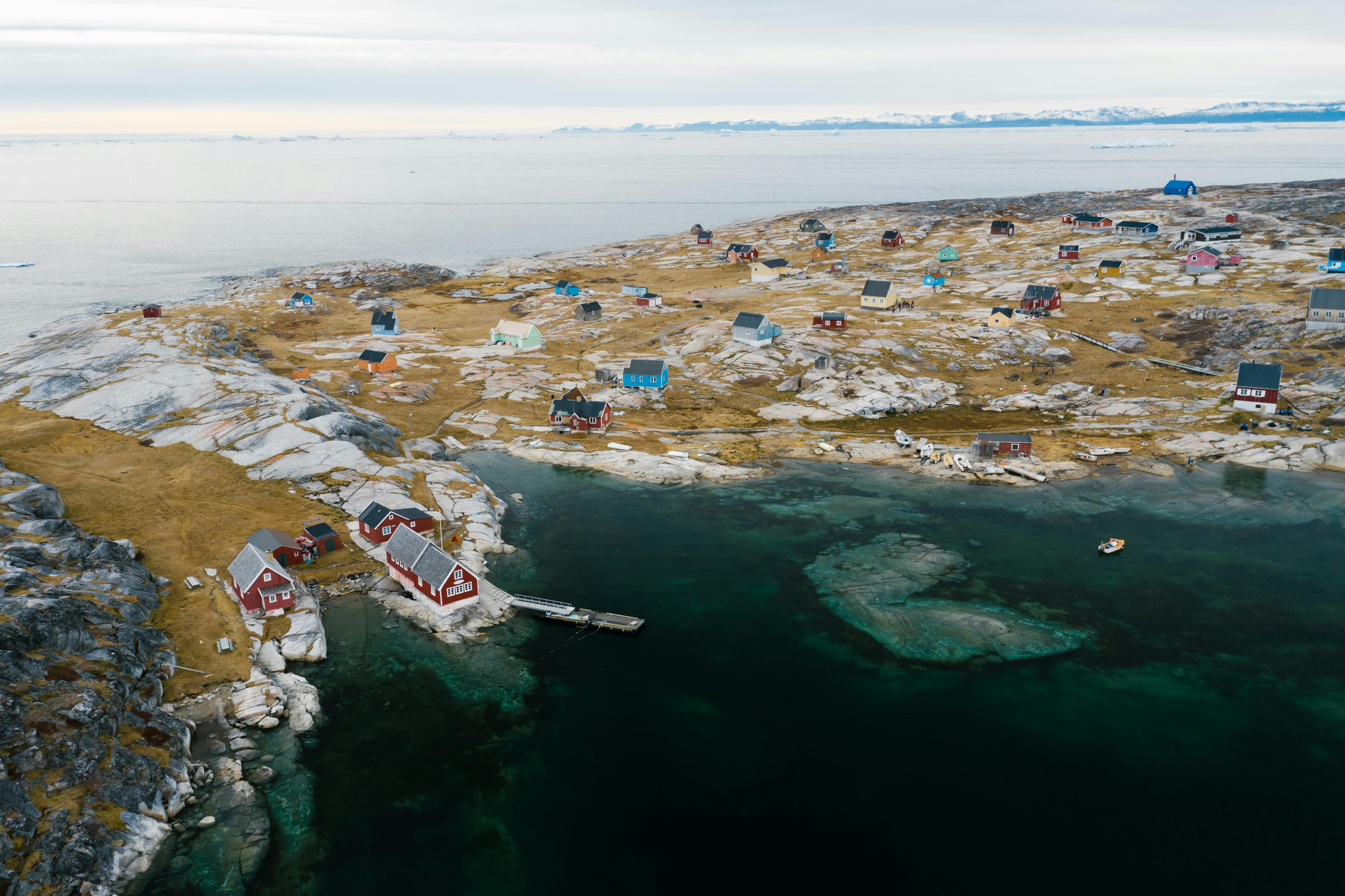
The accelerating impacts of climate change are reshaping the Arctic, consequently fostering a catalyzation of geopolitical competition and economic prospecting. Environmental shifts, in particular the degradation of sea ice, are opening previously inaccessible maritime routes and creating novel avenues for economic exploitation. This particular framing constitutes the dominant discourse within contemporary government approaches, policy briefings, and a significant portion of academic literature addressing the modern-day Arctic. Underscoring this perspective, however, is a conspicuous absence: the very stakeholders most pertinently affected. The Indigenous Peoples (IPs) of the Arctic, whose livelihoods and cultural heritage are intrinsically linked to this rapid transformation, are frequently omitted from such analyses.
This omission is stark given that the right of IPs to self-determination, as enshrined in Article 3 of the UN Declaration on the Rights of Indigenous Peoples (UNDRIP), mirrors the foundational language of common Article 1(1) of the International Covenant on Civil and Political Rights (ICCPR) and the International Covenant on Economic, Social, and Cultural Rights (ICESCR) (United Nations Declaration on the Rights of Indigenous Peoples, Art. 3; United Nations General Assembly 1966). Consequently, this right is intrinsic to IP's autonomy, guaranteeing their right to freely determine their own economic, social, and cultural development and to manage their own natural resources for their own benefit. Central to the realization of this self-determination are the State's duties of consultation and the obtaining of free, prior, and informed consent (FPIC). The obligation to secure FPIC is not a mere procedural formality ; rather, it constitutes a substantive mechanism to ensure the respect of IP's rights. This principle entitles IP to effectively contribute to determining the outcome of decision-making processes that directly affect them, transcending a mere right to be involved (United Nations Human Rights Council, Expert Mechanism on the Rights of Indigenous Peoples 2011, para. 21). Genuine consent, therefore, is the product of good-faith consultation and meaningful participation, in accordance with pacta sunt servanda enshrined in the Vienna Convention (United Nations, Vienna Convention on the Law of Treaties, Art. 26). Adherence to these participatory rights is essential for establishing harmonious, cooperative relations.
In the Arctic, these cooperative relations are currently being challenged. This article aims to synthesize some of the critiques levelled against the Westphalian-oriented governance and security sphere(s) and center some Indigenous voices on these domestic and global issues. Having established the legal basis in the human rights provisions outlined above, the article will recommend some policy recommendations that aim to move policies closer to the provisions. The article uses two cases to illustrate the point: 1) the Sámi inclusion in Norwegian domestic security policies ; and 2) the fight for geopolitical domination in Greenland.
Sámi and Norwegian domestic security policy
The Sámi and Norwegian Sámi Parliament have persistently called for increased involvement in the nation's securitization measures, a demand that underscores the broader challenges IPs often face in securing meaningful inclusion within domestic security policies. This contemporary pursuit of involvement is set against an unjust historical backdrop. Historically, the Sámi people have both contributed directly to national defense, such as through their contribution in military operations during World War II, and simultaneously been targets of state distrust, like during the Cold War, where Sámi individuals were subjected to government surveillance stemming from fears of potential extremism and guerrilla activities ("Mo Birget Soađis"; "Ulovlig Overvåking Av Samer"). This inconsistency in involvement and perception highlights a deficit in the recognition of Sámi securitizational importance.
Especially catalyzed by current geopolitical pressures, the Sámi parliament included security strategies for the first time ever in its parliamentary discussions this summer, in the form of a declaration (NRK 2025). The main points of the declaration state that the Sámi Parliament wants the Sámi people to have a voice in NATO structures and military command systems in Norway, Sweden, and Finland, as Sámi areas can be affected by military exercises and crisis situations. It emphasizes that the Armed Forces must respect Sámi culture, language, and livelihoods, and follow international rules when operating in areas inhabited by Sámi people. The declaration also calls for Sámi participation in planning military activities that may affect them, in line with rules on consulting local populations. While there is support for increased defense in North Norway, this must be done in a way that does not harm Sámi communities or their use of nature. Furthermore, Sámi communities, including their knowledge and resources, should be part of the nation's crisis management plans. Lastly, the Sámi Parliament wishes for the Sámi people across Norway, Sweden, and Finland to cooperate on security matters. This historical shift in security approach marks an increased recognition of the increasingly complex and interconnected challenges facing the IPs of the high north on the Fennoscandian peninsula.
This call for action was not met without criticism, however. Critiques inter alia argued that the Sámi parliament declaration was more concerned with securing their own interest than with what they could offer to the domestic security strategy (Markussen 2025). This framing may be contested, particularly in light of the historical injustices the Sámi have suffered. Underscoring this is the long-lasting impact of domestic and transnational assimilation policies, which necessitate that security be addressed through a rights-based approach. This approach is a means by which the protection and realization of a culture and way of life, long assailed by such policies, may be ensured. Moreover, the holistic understanding of security presented in the declaration contributes significantly to the contemporary understanding of what security entails, moving beyond a purely state-centric focus on weapons of mass destruction. In this context, the participation of marginalized groups, especially rights-holders such as Indigenous Peoples, signifies more than the advancement of their own interests. It constitutes both a necessary remedy for historical injustice and an inclusive, empowered approach to the protection of domestic state sovereignty.
Greenlandic Self-Determination
The insufficient inclusion of IPs in security policies is not an exclusively domestic phenomenon. This exclusionary deficit was conspicuously highlighted during recent geopolitical contestations over the sovereignty of the Greenlandic people. The world's biggest island has long been the subject of imperialistic actions taken by colonial settlers and, more recently, distant hegemonic actors. European colonization began in Greenland in 1721 when the Norwegian priest Hans Egede established the now capital of Nuuk, from which he converted local Inuit with violence and threats (Jensen n.d.). "The colony," as it was described by the Danes, subsequently endured long-lasting assimilationist policies of Danization, culminating inter alia in present-day extreme discrimination in the job market (Petersen 1995; Ravn and Høgedahl 2023). These historic and contemporary realities truly entered the world stage after what can only be described as a continuum of American imperialism staked a claim to the Greenlandic peoples' territorial sovereignty. Comments like "we need Greenland for national security and even international security" and "it's a very small population, a very, very large piece of land, and very, very important for military security" exemplify this imperialistic state-centric framing (Jonassen n.d.). This complete disregard for Greenlandic self-determination was thereby globalized, reinforcing a hegemonic perspective that views Indigenous lands primarily as strategic assets.
In a direct assertion of self-determination against such external imperialism, the Greenlandic government released its first holistic security and defense documents. Titled "Greenland in the World: Nothing About Us Without Us – Greenland's Foreign, Security and Defense Policy 2024–2033," the strategy outlines a new framework for active participation in its own security (Naalakkersuisut / Government of Greenland 2024). It stipulates, inter alia, that Greenland will align with countries respecting international law and the right to self-determination ; enhance its own expertise, preparedness, and contingency plans for incidents and attacks on critical infrastructure ; and support Greenlandic parliamentarians becoming members of the NATO Parliamentary Assembly. Furthermore, the policy endorses dual-use infrastructure, such as increased surveillance for civilian purposes like search and rescue ; establishes a dedicated administrative unit for the American Pituffik Space Base issues ; insists Greenland must be involved in enforcing its own territorial sovereignty; and mandates preparations to ensure supply chain security, signalling a commitment to developing an increasingly detailed security and defense policy over time. In sum, the strategy and subsequent actions exemplify an increased pursuit of self-determination for the Greenlandic people, channelled through security and defence policy. The reaction to the strong American imperialism, seen concurrently with the aspirations for increased participation of Greenlandic parliamentarians in NATO, signals a heightened call for self-determination in policies that affect the Greenlandic people on an intergovernmental level.
Policy Recommendations
Based on the national and transnational inclusionary deficiencies in the security policies delineated above, this article makes the following recommendations:
To ensure the real implementation of effective participation and FPIC by moving beyond formalistic consultation to a substantive right to influence outcomes. This necessitates the formal inclusion of IP's representative institutions, such as the Sámi Parliament and the Greenlandic government, in all relevant security structures. This includes, as the Sámi Parliament declaration calls for and the Greenlandic security strategy states, securing a voice in NATO structures and military command systems and ensuring IP participation in the planning of military activities that may affect them, in accordance with UNDRIP.
To broaden the dominant, state-centric security discourse by integrating the holistic understanding of security presented by Indigenous rights-holders. This requires affirming the right to internal self-determination and ensuring that all securitization measures are formulated to respect and protect IP culture, language, and livelihoods. This operationalizes the Sámi declaration's demand that military activity must not harm Sámi communities or their use of nature.
To increasingly reframe security investment by prioritizing dual-use infrastructure that serves both state security and pressing societal needs, such as the increased surveillance for search and rescue and supply chain security capabilities desired by Greenland. This approach counters the purely state-centric framing of Indigenous lands as mere "strategic assets" and instead invests directly in the resilience and well-being of the local population.
To operationalize meaningful reconciliation by acknowledging the long-lasting impact of historical assimilation policies and state distrust. This must translate into concrete, corrective action, such as the full integration of IP traditional knowledge and community resources into formal crisis management plans. Recognizing this participation as a remedy for historical injustice is an inclusive and empowered approach to strengthening security policy.
To ensure that Indigenous self-determination extends to direct oversight and participation in administrative authority over military and security installations on Indigenous lands, exemplified by Greenland's call to establish a dedicated administrative unit for the Pituffik Space Base. This helps move the relationship beyond passive hosting to one of active partnership, co-management, and direct involvement in the enforcement of sovereignty.
Works Cited
Jensen, Marianne. n.d. "The Colonial Period until the War Years - Trap Greenland." Accessed November 6, 2025. https://trap.gl/en/historie/the-colonial-period-until-the-war-years/.
Jonassen, Trine. n.d. "Trump Says The U.S. Will Take Control of Greenland 'One Way or The Other.'" Accessed November 6, 2025. https://www.highnorthnews.com/en/trump-says-us-will-take-control-greenland-one-way-or-other.
Markussen, John Arne. 2025. "Sametinget fokuserer for mye på egne rettigheter og krav." Nettavisen, June 12, 2025. https://www.nettavisen.no/5-95-2479185.
"Mo Birget Soađis (How to Cope with War) - Strategies of Sámi Resilience during the German Influence Adaptation and Resistance in Sámi Relations to Germans in Wartime Sápmi, Norway and Finland 1940-1944." n.d. Accessed November 5, 2025. https://www.google.com/search?q=https://munin.uit.no/bitstream/10037/17966/2/article.pdf.
Naalakkersuisut / Government of Greenland. 2024. Greenland in the World: Nothing About Us Without Us - Greenland's Foreign, Security and Defense Policy 2024-2033-an Arctic Strategy. https://paartoq.gl/wp-content/uploads/2024/03/Greenlands_Foreign_-Security_and_Defense_Policy_2024_2033.pdf.
NRK. 2025. "Sikkerhetspolitikk for første gang på Sametinget." NRK, June 5, 2025. https://www.nrk.no/sapmi/sikkerhetspolitikk-for-forste-gang-pa-sametinget-1.17444483.
Petersen, Robert. 1995. "Colonialism as Seen from a Former Colonized Area." Arctic Anthropology 32, no. 2: 118-26. [suspicious link removed].
Ravn, Rasmus Lind, and Laust Høgedahl. 2023. "Employment in a Post-Colonial Society - The Case of Greenland." Journal of Industrial Relations 65, no. 5: 640-62. https://doi.org/10.1177/00221856231204486.
"Ulovlig Overvåking Av Samer." n.d. Accessed November 5, 2025. https://arkiv.nrk.no/programoversikt/avansert/index7375.html.
United Nations. 1969. Vienna Convention on the Law of Treaties. A/CONF.39/27. United Nations, Treaty Series. Vienna. https://legal.un.org/ilc/texts/instruments/english/conventions/1_1_1969.pdf.
United Nations Declaration on the Rights of Indigenous Peoples. 2007. Pub. L. No. A/RES/61/295.
United Nations General Assembly. 1966. International Covenant on Civil and Political Rights. A/RES/2200A (XXI).
United Nations General Assembly. 1966. International Covenant on Economic, Social and Cultural Rights. A/RES/2200A (XXI).
United Nations Human Rights Council, Expert Mechanism on the Rights of Indigenous Peoples. 2011. Expert Mechanism Advice No. 2 (2011): Indigenous Peoples and the Right to Participate in Decision-Making. A/HRC/EMRIP/2011/2. https://www.ohchr.org/sites/default/files/Documents/Issues/IPeoples/EMRIP/Advice2_Oct2011.pdf.
About the Author
Currently pursuing a master’s in Human Rights at the University of Oslo, Mathias builds upon his bachelor’s degree in development studies with extensive international experience. He has experience with complex social and policy issues firsthand, inter alia through an internship at the Norwegian Embassy in Dhaka, Bangladesh, and exchange semesters in the United States, Uganda, and Greenland. His primary areas of interest include peace and reconciliation, participatory development, Indigenous rights, and Arctic security.