Established on January 15, 2026, as stipulated by United Nations Security Council Resolution 2803, the Board of Peace was formally institutionalized on January 22, 2026. Its purpose, however, has diverged sharply from its original mandate: to guide the reconstruction of Gaza and coordinate the associated funding (Resolution 2803 (2025) Security Council).
An alternative to the UN system: reinventing peacekeeping?
It was on the sidelines of the World Economic Forum in Davos, Switzerland, that Donald Trump signed the charter of this new international organization, created under his direct initiative. Defined in its founding document as an international organization endowed with legal personality, the Board of Peace embodies a deliberate rupture with the multilateral order established in the aftermath of the Second World War. At the same time, it reflects the United States’ increasingly revisionist posture on the international stage.
This initiative illustrates Trump’s ambition to reshape the architecture of global governance by creating an institution capable of bypassing the delays and deadlocks inherent in traditional multilateralism, while reaffirming a clear and assertive form of American leadership.
Lamenting the inefficiency of the United Nations system, without explicitly naming it, the Board of Peace’s Charter declares its intention to ‘promote stability, restore dependable and lawful governance, and secure enduring peace in areas affected or threatened by conflict’. These objectives reposition the Council not as an ad hoc body tasked solely with overseeing Gaza’s reconstruction, but rather as an international organization claiming the capacity to intervene in any conflict worldwide.
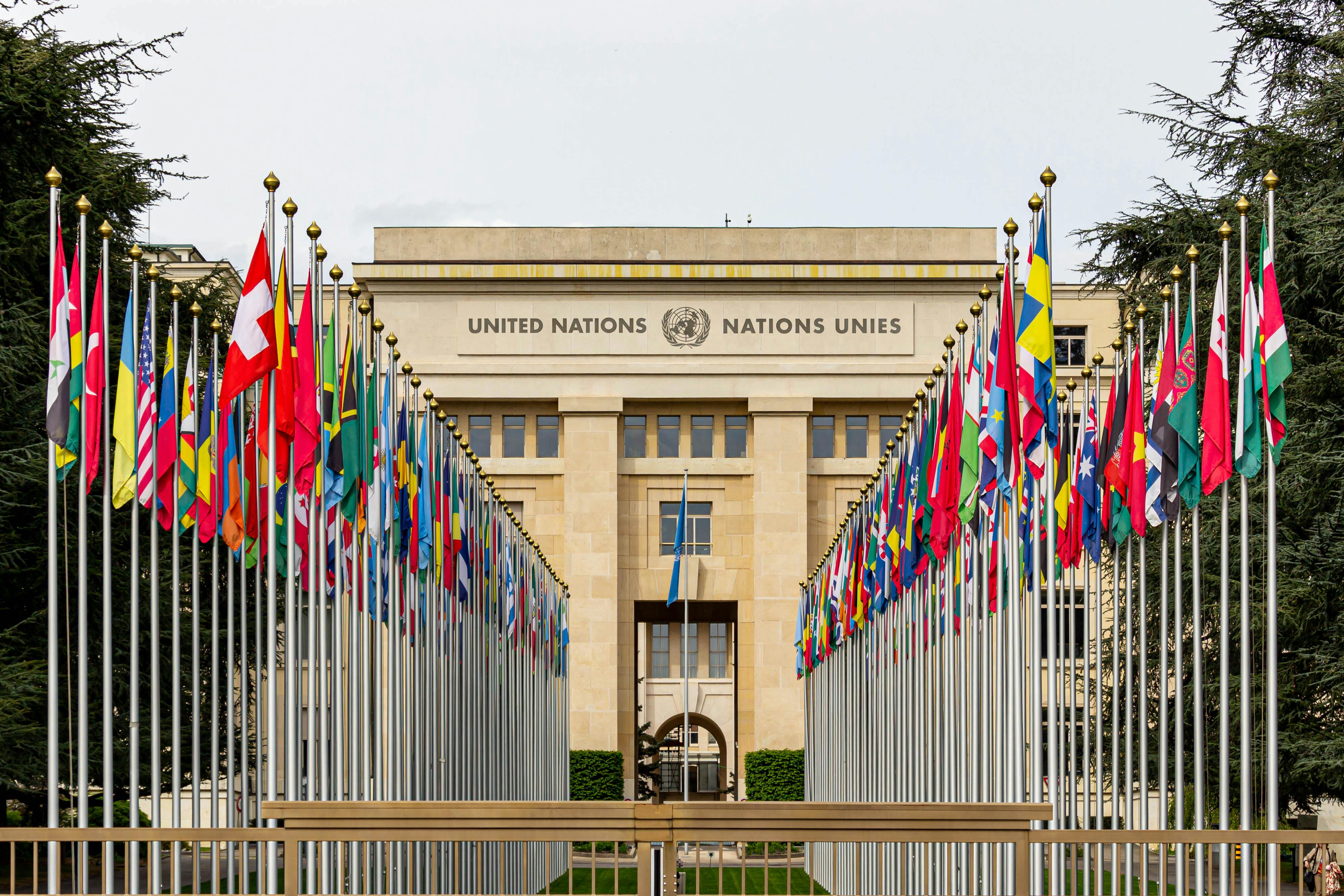
By doing so, its role is similar to the central pillar body of the UN: the Security Council, which has held ‘primary responsibility for the maintenance of international peace and security’ since 1945 (article 24 of the United Nations Charter). The Board of Peace thus presents itself as an alternative to the United Nations framework, portrayed as rigid, insufficiently effective, and lacking representativeness. It claims to offer ‘pragmatic judgment and common sense-solutions’ in contexts where UN institutions have struggled to act.
Nevertheless, an examination of its structure and operational mechanisms suggests that the Board of Peace is above all an instrument of unilateral power, designed to concentrate authority in the hands of its founder.
A personalized governance structure: Donald Trump’s direct control
The Board of Peace assigns a central role to its chairman, none other than Donald Trump himself, explicitly named in the founding charter in his personal capacity. This first and foremost implies that the position is personally rather institutionally tied to his role as President of the United States, thereby allowing him to remain Chairman of the Council even after the end of his second term. This arrangement is further secured by article 3.3 of the Charter, which stipulates that ‘replacement of the Chairman may occur only following voluntary resignation or as a result of incapacity’, as determined by the Executive Board, an entity composed of members appointed by the chairman himself. In such a case, a successor designated by the outgoing chairman would take over. This represents a highly unusual mode of governance for an international organization, one entirely structured around its chairman and founder.
Membership rules reflect the same logic of control. Although the Charter’s Preamble talks about creating a ‘coalition of willing states’, in practice, only countries invited by the chairman can join. Member States are granted terms of up to three years, with exceptions made for those contributing over one billion dollars in the Council’s first year. The Chairman retains the power to invite states (article 2.1), renew mandates (article 2.2(c)), or revoke membership entirely (article 2.3).
Governance is further concentrated through the Executive Board. Member States are formally represented by their heads of state or government, but real authority rests with an Executive Board. Members of this board are ‘leaders of global stature’, chosen by the Chairman for a two-year term, and led by a Chief Executive appointed by the Chairman. This Executive Council includes several of Donald Trump’s close associates: Jared Kushner, the President’s son-in-law and son of the U.S. Ambassador to Paris; Steve Witkoff, Special Envoy to the Middle East; Marco Rubio, U.S. Secretary of State; Robert Gabriel, U.S. Deputy National Security Advisor; Tony Blair, former British Prime Minister; Marc Rowan, a private equity executive, and Ajay Banga, President of the World Bank.
The Executive Board is mandated to ‘exercise powers necessary and appropriate to implement the Board of Peace’s mission’ and reports quarterly to the Council on its activities and decisions. In addition, the Executive Board is responsible for setting the agenda of the Board of Peace meetings, which must then be approved (or not) by the chairman.
As for the Board of Peace itself, its members meet at least once a year and adopt decisions by majority vote among participating states. Nevertheless, decisions remain subject to the approval of the Chairman, who holds exclusive veto power. This system therefore differs from the United Nations Security Council, which is based on a shared veto among the five permanent members. This mechanism inherited from the post Second World War international order, is moreover often criticized for its unequal nature and for the decision-making deadlocks it creates in managing international crises.
This decision-making process also reinforces the chairman's central role, since he approves the agenda, the proposals submitted for a vote, and the final decisions. These decisions may cover budget adoption, the creation of subsidiary bodies, the negotiation of international agreements, and new peacebuilding initiatives. Moreover, Donald Trump combines his role as Chairman of the Council with that of U.S. representative until the end of his presidential term in January 2029.
Finally, the Charter grants the chairman a major role in resolving any internal disputes involving Council members, subsidiary entities, or staff, designating him as ‘the final authority regarding the meaning, interpretation, and application of this Charter’. Checks and balances on the chairman–and, by extension, on Donald Trump–therefore appear extremely limited, if they exist at all.
A lens on shifts in the international system
The Board of Peace was designed to come into effect once three states had expressed their consent to be bound. Among the roughly fifty invitations sent by the U.S. administration, about twenty states officially agreed to join the new organization, spanning the Middle East, Asia, Europe, Latin America and the Caucasus. Notably, this includes the signatories of the Abraham Accords: Israel, the United Arab Emirates, Bahrain, Morocco, and Kazakhstan, as well as Armenia and Azerbaijan, that signed a peace agreement in August 2025 under U.S. auspices. Conversely, roughly ten countries, including France and Norway, explicitly declined to join the Council, prompting Donald Trump to threaten 200% tariffs on French wines and champagnes, directed at President Emmanuel Macron. Canada was also removed from the list of invitees following Prime Minister Mark Carney’s speech at the Davos Forum, in which he warned of a new era of great power rivalries. He urged other ‘middle powers’ to come together in response to economic coercion, although he did not explicitly mention Donald Trump. Participation in the Board of Peace therefore quickly became a marker of strategic alignment with the United States and of states’ willingness to accept a new form of international governance centered on Washington.
Regarding its prerogatives, the Council’s founding Charter does not provide for the use of armed force, a competence that remains with the United Nations Security Council. It is worth noting that the San Francisco Charter, in Chapter VIII, allows for the existence of ‘regional agreements or organizations for dealing with such matters relating to the maintenance of international peace and security as are appropriate for regional action. It even permits the use of these regional bodies to implement coercive measures under the authority of the Security Council. From a legal standpoint, the creation of the Board of Peace therefore does not appear to pose a major obstacle, although its qualification as a regional organization is open to question. In theory, the Board of Peace could receive Security Council approval for armed interventions.
Furthermore, Member States of the Board of Peace remain subject to the obligations that arise from their UN membership. Indeed, their obligations under the UN Charter take precedence over any other obligations arising from other international agreements, pursuant to article 103 of the United Nations Charter. While the Board of Peace’s Charter refers to respect for international law, statements by Donald Trump asserting that he does ‘not need international law” (Yang, 2026) call into question the practical implementation of this principle.
The Board of Peace thus reflects Donald Trump’s revisionist approach to the multilateral system, particularly toward UN institutions. It is important to note, however, that Trump's initial proposal to create a council responsible for overseeing Gaza’s reconstruction was approved by the UN Security Council Resolution 2803 (2025). This demonstrates that Trump does not reject the UN framework entirely but rather seeks to create parallel mechanisms to exert more direct control over governance and decision-making processes. Moreover, despite the United States’ withdrawal from sixty international organizations in early January 2026, it retains its permanent seat on the Security Council, illustrating its ability to combine selective engagement with sustained strategic influence within the institutions that shape the global order.
The Board of Peace, therefore, will not replace the United Nations. However, it functions as a parallel diplomatic channel and reflects a profound transformation in the way global governance operated and in the explicit power dynamics at play. Its influence will depend largely on the number of states willing to join, since only members that formally agree to participate are required to comply with its rules (while giving precedence to their obligations under the UN Charter). Paradoxically, states that criticize the UN system for its concentration of power and lack of representativeness are willing to join an international organization entirely controlled by a single leader, Donald Trump.
Bibliography:
Magid, Jacob. “Full text: Charter of the Board of Peace”. The Time of Israel, January 18, 2026. https://www.timesofisrael.com/full-text-charter-of-trumps-board-of-peace/
Maya Yang, “‘I don’t need international law’: Trump says power constrained only by ‘my own morality’”, The Guardian, January 8, 2026. https://www.theguardian.com/us-news/2026/jan/08/trump-power-international-law
United Nations. Charter of the United Nations. June 26, 1945. https://www.un.org/en/about-us/un-charter
United Nations Security Council. Resolution 2803 (2025). S/RES/2803 (November 17, 2025). https://digitallibrary.un.org/record/4093207/files/S_RES_2803_%282025%29-EN.pdf
Agathe Delorme holds a master’s degree in public international law from Aix-Marseille University (France). Her areas of interest include multilateralism, international cooperation and transatlantic relations.