
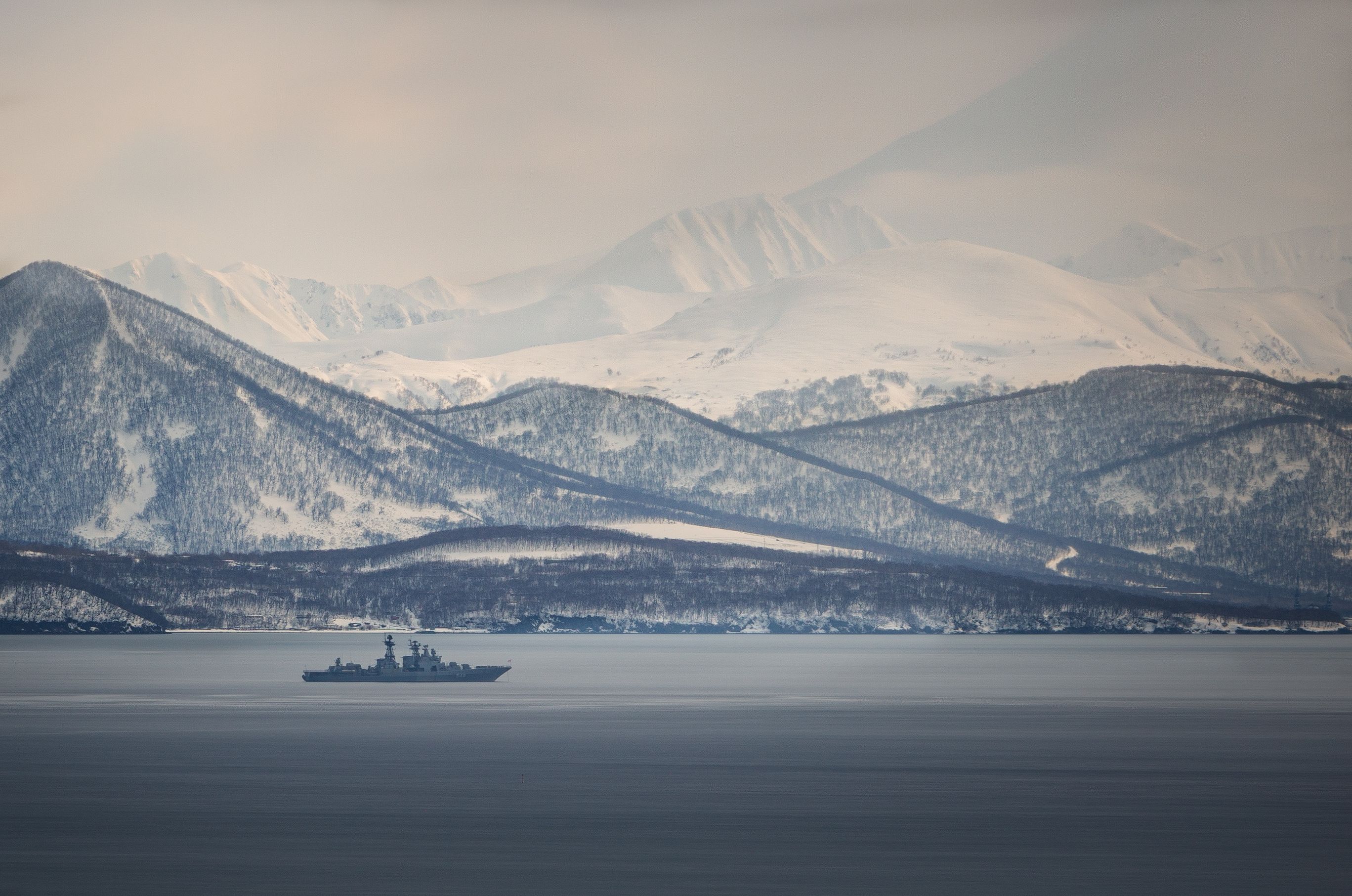
This policy brief outlines how the various Arctic NATO states are redeveloping their maritime power in the Arctic primarily through the acquisition of new icebreakers. This policy brief also explains that the primary flaw with the various state led programs is that they address the specific national security interests of the individual states and are not driven by a collective multilateral framework which results in shortcomings from a joint NATO based perspective. To make Arctic security more prevalent in NATO security discussions, the Arctic-centric strategic level planning needs to be incorporated into becoming NATO’s Deterrence and Defence of the Euro-Atlantic Area (DDA) Family of Plans. This would allow a more concise and joint approach to projecting maritime power particularly with icebreakers and allow further development of NATO led coordination and operational planning.
Analysis of Current Policies
Canada
Canada’s first bid at expanding its Arctic security initiative was articulated in the Department of National Defence’s (DND) Strong, Secure, Engaged: Canada’s Defence Policy (SSE) released in 2017 (Department of National Defence 2017). The DND committed to enhancing the navy’s capabilities in the Arctic to work alongside Canadian Coast Guard (CCG) by delivering six Arctic and Offshore Patrol Ships (AOPS) with a limited icebreaking capability (PC 5) (Lajeunesse 2018), the last of which was delivered to the Royal Canadian Navy in August 2025 (Department of National Defence 2025). Since the release of SSE, Canada has continued to expand its mandate to generate a credible Arctic maritime presence with new icebreakers. These efforts were expanded upon in the defence policy update Canada’s Our North, Strong and Free: A Renewed Vision for Canada’s Defence (Department of National Defence 2024).
Through the National Shipbuilding Strategy launched in 2010, Canada has committed to delivering two additional AOPS to the CCG, two polar icebreakers (PC 2) operated by the CCG, in addition to six new CCG program icebreakers and up to sixteen Multi-Purpose Icebreakers (MPI) (PC 4) that will replace the CCG’s aging fleet of heavy and medium icebreakers currently in service (Public Services and Procurement Canada 2026; Seaspan n.d.).
On September 2nd, 2025, the CCG was transferred to DND. While the CCG will sustain its civilian functions it will be more systematically incorporated in the military’s mission to sustain Canada’s Arctic security by enhancing the CCG’s surveillance capabilities. This will enhance the ability of Canada to have a more sustained and complete intelligence posture in the Arctic by turning CCG icebreakers into dual use vessels with both civilian and military responsibilities. The incorporation of the CCG to Canada’s security system in addition to the numerous new icebreaker projects indicates that Canada is fully committed to redeveloping its maritime Arctic presence.
Denmark
In 2023 the Danish Ministry of Foreign Affairs published their Foreign and Security Policy Strategy in which they expressed that Denmark would continue developing their Arctic security in close cooperation with the governments of Greenland and the Faroe Islands and their international partners (Ministry of Foreign Affairs 2023). This included working towards an enhanced presence from the Danish military. Also in 2023, the Danish government established the Danish Defence Agreement 2024-2033, which provided the financial framework to support Denmark’s implementation of reinvestment in its military capabilities.
By 2023, Denmark had a marginal icebreaking capability in the High North (Energy Cluster 2023; NATO 2023). However, as explained in the Second Agreement on the Arctic and North Atlantic Denmark has committed to $27.4 billion DKK for security acquisitions in the Arctic this will include five new Arctic Patrol Vessels for the Royal Danish Navy (RDN) to strengthen their presence in the waters around Greenland (Danish Ministry of Defence n.d.). This planned acquisition of icebreakers for the RDN will enhance Denmark’s maritime power in the Arctic. Additionally, in February 2026, Denmark and Canada signed a Canada-Denmark Defence Cooperation Memorandum of Understanding that specifically targeted enhancing cooperation between the two states in the North Atlantic and High North (Department of National Defence 2026). Through a new financial commitment, the procurement of new vessels, paired with both bi-lateral and multi-lateral Memoranda of Understanding (MOU), Denmark has rapidly redeveloped its Arctic security interests and capabilities.
Finland
Finland’s icebreaking fleet is managed by the state-owned limited liability company Arctia Ltd, which is regulated by the Finnish Ministry of Transportation and Communication. This company ensures that commercial shipping and government vessels can safely successfully navigate through the ice filled Baltic Sea during the winter months.
Finland’s Government Defence Report 2024 states that their strategic interests in the High North are to “secure critical infrastructure and to protect sea lines of communication in the North Atlantic all the way to the Arctic Ocean.” (Ministry of Defence of Finland 2024, 32). However, the report does not express any Finnish interest in operating in the Arctic Ocean itself. This indicates that Finland has a limited physical security interest in the Arctic region.
However, Finland is an industry leader in icebreaker shipbuilding. As such the state and Finnish companies are sought internationally for this expertise, illustrated by acquisitions such as that of 11 American icebreakers for the United States Coast Guard (USCG), with four being constructed in Finland. Therefore, Finland is using its Arctic shipbuilding industry as a tool of soft maritime power.
Iceland
Iceland is a unique Arctic nation. It does not possess an icebreaking fleet as the Gulf Stream keeps their waters relatively ice free. Additionally, Iceland is the only NATO member without a standing military. Instead, the state’s maritime security is sustained by the Icelandic Coast Guard (ICG).
Despite not having a military, Iceland’s defence is constructed by a series of bilateral agreements with other key members of the NATO alliance. Namely, the 1951 Bilateral Defence Agreement with the United States of America (“Defence of Iceland” 1951). Following the withdrawal of American forces in 2006, this bilateral security relationship was redefined by a Joint Understanding 2006 document that reestablished a new framework for American and Icelandic security relations (“Joint Understanding 2006” 2006).
Iceland’s Defence Act No 34/2008 is a key pillar of legislation that emphasises that Icelandic security will be sustained with cooperation with foreign states (primarily NATO allies) instead of developing its own military forces (Government of Iceland n.d.). Since 2007, Iceland has concluded defence cooperation agreements with Canada, Denmark, Norway, and the United Kingdom. Additionally Iceland’s port at Keflavík is frequently used as a base to support allied military activities. Iceland is choosing not to develop its own physical maritime power to project across the North Atlantic and Arctic instead implementing an active policy of cooperation with several Arctic based NATO allies.
Norway
Through The Norwegian Government’s Arctic Policy: People opportunities and Norwegian interests in the Arctic released in 2021, Norway identified that the effects of climate change are opening the Northeast Passage to more Russian and Chinese commerce and creating new security challenges to Norway (Norwegian Ministry of Foreign Affairs 2020). Norway does sustain a fleet of icebreakers to ensure there is a consistent maritime presence in its Arctic Svalbard archipelago. The Norwegian fleet includes Research Vessel (RV) Kronprins Haakon (PC 3) owned by the Norwegian Polar Institute, the coast guard’s NoCGV Svalbard (PC 5), and three new Jan Mayen class icebreaking capable (PC 6) Offshore Patrol Vessels. Unlike most NATO militaries, Norway’s coast guard is a part of the Royal Norwegian Navy. The three new Jan Mayen class OPVs represent a fundamental shift in Norway’s Arctic presence as these ships will allow Norway to operate in regions of the Arctic ocean in which they have previously failed to maintain a persistent presence.
In 2025, the Office of the Prime Minister of Norway published its first National Security Policy, that addresses the new rapidly developing international security environment. The strategy acknowledges that growing global geopolitical competition is amplifying the importance of the Arctic and Norway’s need to take an active role at promoting stability in the region (Office of the Prime Minister of Norway 2025, 14). These efforts were echoed in Norway in the North: A High North policy for a new era, published by the Royal Norwegian Ministries in 2025, in which they expressed their intent to maintain both an active civilian and military presence in the Arctic as well as cooperate with their Nordic and North America allies (The Norwegian Ministries 2025, 6-7).
Sweden
Historically, Sweden’s icebreaking fleet has been operated by the Swedish Maritime Administration (SMA) to keep Baltic ports open for commercial shipping during the winter months. The SMA is a government agency responsible for keeping sea lanes open. The SMA operated five aging icebreakers before acquiring the newer Idun as a stop gap to support the aging vessels making the fleet six icebreakers. Traditionally, Sweden has used these icebreakers as an instrument of soft power. However, the deteriorated security environment in Europe has driven Sweden to start redefining its icebreaking fleet as a hard power asset.
Sweden’s ascension into NATO was followed by a new National Security Policy released on July 8th, 2024, which outlines Sweden’s strategic shifts in its national security as a new member of NATO (Prime Minister’s Office 2024). Sweden’s implementation of a total defence integration between military and civilian agencies indicates that Sweden’s civilian operated icebreakers will be treated as more of a dual-use asset, fulfilling its civilian obligations while being capable of being redirected to military controlled tasks if required (Prime Minister’s Office 2024, 29-30). Sweden has identified a need to redevelop its arctic maritime capabilities, but it is not yet clear exactly how Sweden will proceed with redeveloping a credible icebreaker fleet as a tool of power projection.
The United States of America
Despite being the largest naval power in the world, the United States has a fleet of 21 smaller ships with ice breaking capabilities as well as two medium icebreakers and a single heavy icebreaker. In October 2022, the National Security Council (NSC) released the National Strategy for the Arctic Region (NSAR), an updated version of the NSAR released in 2013 (The White House 2022). This document expressed that having an effective Arctic security policy deters threats to the American homeland, while mitigating the risk of unintended escalation (The White House 2022, 3). The 2022 NSAR also outlined a plan to make long term investments including the procurement of new icebreakers.
Then in 2024, the United States Department of Defense (DoD) released its 2024 Arctic Strategy (Department of Defense 2024). It emphasises that the Arctic security environment is being increasingly defined by great power competition with Russia and China, both increasingly active in the Arctic. The document also states that the DoD would partner with the Department of Homeland Security (DHS) to support the redevelopment and acquisition of at least eight polar icebreakers capable of serving as a dual use asset with both military and civilian needs.
The commissioning of the USCGC Storis in 2024, from a commercial vessel, served as a stop gap solution to bridge the icebreaking gap before a new fleet can be built. American operational commanders believe that to meet their national security objectives the US needs to employ a Three and Three Strategy, having a minimum of three medium and three heavy icebreakers (Laird 2026).
In February 2026, the Executive Office of the President of the United States released America’s Maritime Action Plan (Executive Office of the President 2026). The plan emphasises enhanced cooperation between the DHS and DOW in the Arctic region and investing in the USCG’s icebreaking fleet, in addition to working with allied nations to “share the burden of maintaining access to and defense of the region.” (Executive Office of the President 2026, 24-25).
Multilateralism
Across the Arctic, NATO members support several bilateral and multilateral agreements that mutually support the individual and collective interest. In 2009, a MOU between Denmark, Finland, Iceland, Norway, and Sweden called Nordic Defence Cooperation (NORDEFCO) established a military and defence framework between the participant nations (Nordic Defence Cooperation 2009). NORDEFCO is not a joint military command structure but does allow for coordinated planning and communal assessment of the Nordic Arctic security environment.
Similarly in 2024, Canada, Finland and the United States have signed the joint MOU establishing the Icebreaker Collaboration Effort (ICE Pact) (Public Services and Procurement Canada 2024). This trilateral partnership focuses exclusively on the procurement of icebreakers, streamlining construction so that all three states can redevelop their Arctic maritime icebreaking capabilities while mitigating duplication of efforts.
In February 2026 NATO launched Arctic Sentry, a multi-domain military activity that is designed to strengthen NATO’s posture in the Arctic (NATO 2026). Through Arctic Sentry, NATO states have a platform within the alliance to collectively recognize a necessity to establish a collective understanding that NATO must do more to address Arctic security. This includes developing enhanced large-scale maritime capabilities such as icebreakers.
Conventional Flaws/Shortcomings that need to be addressed
The strategic approach of Canada, Denmark, Finland, Iceland, Norway, Sweden, and the United States in relation to the Arctic varies greatly. This means that the national security needs for one state are very different from the national security needs of other states’ Arctic security needs. Particularly, when it comes to investing in new icebreaking capabilities. This means that there are limits to the mutual support the multilateral institutions like NATO can expect in relation with the Arctic, as Arctic states have a diverse range of national security needs and expectations in the region.
Additionally, competing territorial claims between NATO members serves as an obstacle to a unified framework to approach international security challenges in the Arctic. For example, the United States and the European Union have challenged Canada’s sovereignty claims over the Northwest Passage, in favour of recognizing it as an international strait. Similarly, many Arctic states have competing territorial claims over the seabed extension in the North Pole. These competing national interests mean that each state has a vested interest in mitigating the other states from gaining too much power in the Arctic so as to not impede their own national interests in the region. As such many states choose to have a limited military capability in the region in favour of more civil government institutions such as their coast guards and state-owned corporations.
Policy Recommendations
The biggest challenge to redeveloping naval power in the Arctic is the lack of a unified approach across all seven Arctic NATO members. While there are several multilateral and bi-lateral security institutions, frameworks, and MOU’s, there will be a limit to what NATO can project in terms of naval power in the region unless there is a combined strategic understanding between all Arctic NATO members. As such NATO needs to consider incorporating the Arctic region into NATO’s Deterrence and Defence of the Euro-Atlantic Area (DDA) Family of Plans. This would allow NATO’s Arctic states to come together and draft together strategic level planning to address joint security challenges in the region strictly in a military context.
References
"Defense of Iceland: Agreement Between the United States and the Republic of Iceland, May 5, 1951." 1951. In American Foreign Policy 1950–1955: Basic Documents Volumes I and II. Department of State Publication 6446. Washington, DC: U.S. Government Printing Office, 1957. Reprinted by the Avalon Project: Lillian Goldman Law Library, 2008. https://avalon.law.yale.edu/20th_century/ice001.asp.
“Joint Understanding 2006.” 2006. Archived in the Government of Iceland digital library. https://www.government.is/library/?itemid=46b9fce6-01be-11e8-9425-005056bc530c
Danish Ministry of Defence. n.d. “Fact sheet: Second Agreement on the Arctic and North Atlantic.” Accessed June 12, 2026. https://www.fmn.dk/globalassets/fmn/dokumenter/2025/-publikation-om-delaftale-2-om-arktis-og-nordatlanten-eng-.pdf.
Department of Defense. 2024. “2024 Arctic Strategy.” https://media.defense.gov/2024/Jul/22/2003507411/-1/-1/0/DOD-ARCTIC-STRATEGY-2024.PDF
Department of National Defence. 2017. “Strong, Secure, Engaged: Canada’s Defence Policy.” Government of Canada. https://www.canada.ca/en/department-national-defence/corporate/reports-publications/canada-defence-policy.html.
Department of National Defence. 2024. “Our North, Strong and Free: A Renewed Vision for Canada’s Defence.” Government of Canada. https://www.canada.ca/en/department-national-defence/corporate/reports-publications/north-strong-free-2024.html.
Department of National Defence. 2025. “Arctic and Offshore Patrol Ships.” www.canada.ca. Last modified February 27. https://www.canada.ca/en/department-national-defence/services/procurement/arctic-offshore-patrol-ships.html.
Department of National Defence. 2026. “Canada Strengthens Defence Cooperation with the Kingdom of Denmark.” Government of Canada. February 14. https://www.canada.ca/en/department-national-defence/news/2026/02/canada-strengthens-defence-cooperation-with-the-kingdom-of-denmark.html.
Energy Cluster Denmark. 2023. “Danbjørn and Isbjørn on Their Final Journey.” Effective March 22. https://energycluster.dk/en/members/news/danbjorn-og-isbjorn-pa-deres-sidste-rejse.
Executive Office of the President of the United States. 2026. “America’s Maritime Action Plan.” The White House. https://www.whitehouse.gov/wp-content/uploads/2026/02/Restoring-Americas-Maritime-Dominance.pdf
Government of Iceland. n.d. “National Security”. Accessed June 15, 2026. https://www.government.is/topics/foreign-affairs/national-security/.
Laird, Robbin. 2026. “Always Ready, Persistently Under-Resourced: The USCG Arctic Story.” Defense.info. May 8. https://defense.info/re-thinking-strategy/2026/05/always-ready-persistently-under-resourced-the-uscg-arctic-story/.
Lajeunesse, Adam. 2018. “Unarmed Warships: What Are the AOPS For?” Canadian Global Affairs Institute. https://www.cgai.ca/unarmed_warships_what_are_the_aops_for.
Ministry of Defence of Finland. 2024. “Government Defence Report.” https://julkaisut.valtioneuvosto.fi/server/api/core/bitstreams/277ab3c9-ebfe-40a7-89af-4a2faa60c042/content
Ministry of Foreign Affairs. 2023. “Foreign and Security Policy Strategy.” um.dk. https://um.dk/media/ij2nwuyi/uss_2023_uk_.pdf
Nordic Defence Cooperation (NORDEFCO). 2009. “Memorandum of Understanding between the Ministry of Defence of the Kingdom of Denmark and the Ministry of Defence of the Republic of Finland and the Ministry for Foreign Affairs of Iceland and the Ministry of Defence of the Kingdom of Norway and the Government of the Kingdom of Sweden on Nordic Defence Cooperation.” https://www.nordefco.org/Files/nordefco-mou.pdf
North Atlantic Treaty Organization (NATO). 2023. “Ice Ice Navy – Patrolling Greenland on Denmark’s HDMS Triton.” November 30. https://www.nato.int/en/news-and-events/articles/nato-stories/2023/11/30/ice-ice-navy-patrolling-greenland-on-denmarks-hdms-triton.
North Atlantic Treaty Organization. 2026. “Arctic Security.” Last updated February 16. https://www.nato.int/en/what-we-do/deterrence-and-defence/arctic-security
Norwegian Ministry of Foreign Affairs. 2020. “The Norwegian Government’s Arctic Policy.”. https://www.regjeringen.no/globalassets/departementene/ud/vedlegg/nord/whitepaper_abstract2020.pdf.
Office of the Prime Minister of Norway. 2025. “National Security Strategy.” https://www.regjeringen.no/contentassets/3750a67cb19f4aac881401c5461773d8/en-gb/pdfs/national_security_strategy.pdf
Prime Minister’s Office. 2024. “National Security Strategy.” Government Offices of Sweden. https://www.government.se/globalassets/government/national-security-strategy.pdf.
Public Services and Procurement Canada. 2024. “Memorandum of Understanding among the Government of Canada, the Government of the Republic of Finland, and the Government of the United States of America Regarding a Trilateral Framework for the Production of Arctic and Polar Icebreakers ” Government of Canada. https://www.canada.ca/en/public-services-procurement/services/acquisitions/defence-marine/icebreaker-collaboration-effort-pact/memorandum-understanding.html.
Public Services and Procurement Canada. 2026. “National Shipbuilding Strategy.” Government of Canada. Last Modified January 12. https://www.canada.ca/en/public-services-procurement/services/acquisitions/defence-marine/national-shipbuilding-strategy.html.
Seaspan. n.d. “Welcome to Zscaler Directory Authentication.” Accessed June 15, 2026. https://www.seaspan.com/seaspan-shipyards/shipbuilding/multi-purpose-icebreakers/.
The Norwegian Ministries. 2025. “Norway in the North: A High North policy for a new era.” Norwegian Ministry of Local Government and Regional Development, and Norwegian Ministry of Foreign Affairs. https://www.regjeringen.no/contentassets/ce4ca6a943494c1da569f45ae2d8dfb9/en-gb/pdfs/h-2569-e-norway-in-the-north.pdf.
The White House. 2022. “National Strategy for the Arctic Region.” https://bidenwhitehouse.archives.gov/wp-content/uploads/2022/10/National-Strategy-for-the-Arctic-Region.pdf
About the Author
Alec Rembowski is a MA student at the Centre of Military, Security, and Strategic Studies located at the University of Calgary and a Canadian Army reservist at 1st (Halifax-Dartmouth) Field Artillery Regiment. His research focuses on continental defence through the utilization of multi-domain concepts.