
As NATO exercises expand along the northern flank and geopolitical competition intensifies across the Arctic, Nordic policy circles are turning to human security as a complement to defence. Human security – as introduced by the UNDP in 1994 – reframes security around individual welfare (economic, health, environmental, political) rather than just state survival (UNDP 1994). This brief asks whether that framing holds in the Nordic High North and what the implications are for NATO resilience. The Arctic is not only a strategic theatre but a lived environment for indigenous communities and regional populations directly shaped by military activity, infrastructure, and great-power rivalry. This brief argues that the current strategic moment creates pressure to absorb human security into defence logic, and that this absorption, if unchecked, risks undermining the very resilience it is meant to produce by eroding the legitimacy that underpins long-term societal preparedness.
A Shifting Strategic Environment
The security environment facing NATO’s northern members has changed materially. Russia’s invasion of Ukraine, contested US signalling over Greenland’s strategic value, rising Chinese and Russian naval activity in Arctic waters, and accelerating ice loss have elevated the High North from a peripheral to a contested region. NATO has responded with the Arctic Sentry (Feb 2026) and Cold Response (Mar 2026) exercises, led from a Norwegian-US HQ in Nordland. The purpose has been to test coalition readiness under Norway’s Total Defence concept (NATO 2026b; Forsvaret 2026), which conceptually extends beyond military hardware to civil preparedness, societal resilience, and state-citizen relations. This backdrop intensifies Nordic debates on reconciling defence imperatives with human security values, debates which are sharpened by evidence that high-trust societies generate more durable resilience in hybrid environments.
Hybrid Pressure and Societal Targeting
Hybrid pressure is not primarily a military phenomenon. It operates through accumulated disruption to the systems and institutions that populations depend on, such as public services, digital infrastructure, electoral processes, and the information environment. Its political utility lies in reattributing responsibility. When cyberattacks, undersea cable strikes, or disinformation campaigns hit, the visible effect is institutional failure – and blame falls on domestic authorities rather than external actors. Trust erodes, and, at worst, governing capacity weakens visibly.
Nordic countries are structurally well-positioned to resist this specific pressure, which is why the dialogue around these themes in the European High North is robust. High institutional trust, strong media literacy, dense civil-society networks, and capable intelligence and law-enforcement institutions make them harder targets. Yet that strength makes them valuable targets, as they are known to underpin traditional concepts of defence. The European Centre of Excellence for Countering Hybrid Threats identifies high social trust as a strategic asset in Nordic resilience – a form of social capital adversaries have incentives to degrade (Fjäder and Schalin 2024). Elevated digital connectivity and NATO northern-flank exposure raise the stakes further.
Erosion of institutional trust is already measurable, and Finnish researchers have begun documenting and considering the security implications of this downward trend. This trend predates current threats and reflects global pressures on democratic governance that hybrid actors exploit. The policy question is: how can societal cohesion be sustained under heightened threat without measures that undermine the values on which it depends? These hybrid dynamics take on added weight in the Arctic, where the populations most exposed to military expansion and great-power competition are also those whose trust is hardest to win and historically most fragile, precisely because past state priorities have sometimes overridden local needs.
The Arctic Dimension
The Arctic is no longer a geopolitical afterthought. Accelerating sea-ice loss is opening new maritime routes and making previously inaccessible energy and mineral deposits reachable. The United States has explicitly cited Chinese and Russian naval activity in the region as a strategic concern, and renewed attention to Greenland has underlined that Arctic sovereignty and access rights are live issues rather than theoretical ones. For NATO, this matters because Norway, Sweden, and Finland hold significant Arctic territory and are the alliance’s primary holders of competence for cold-weather and northern-flank operations (NATO 2026a).
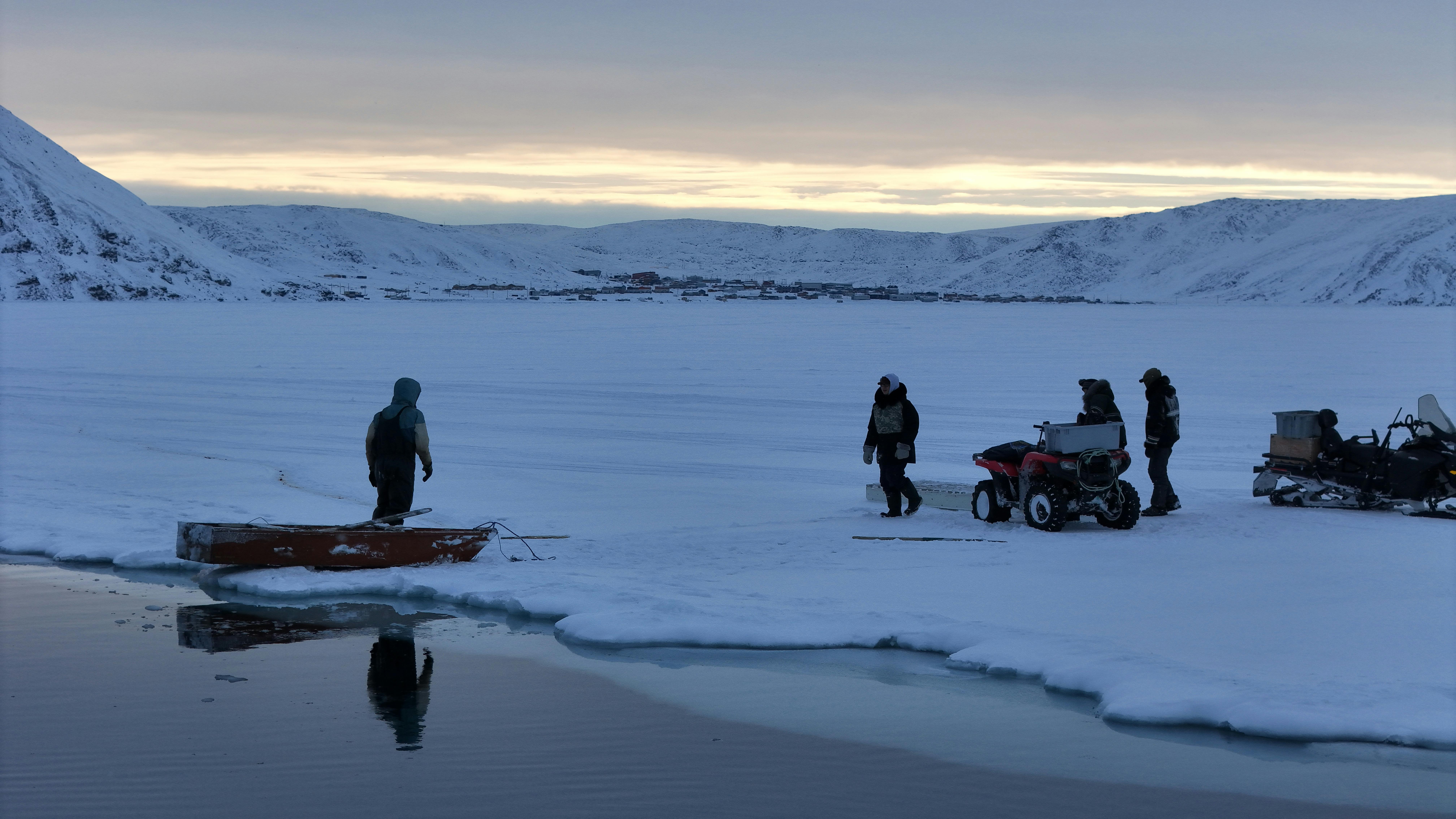
The Arctic also has a human geography that strategic framing often understates. The Sámi – the Arctic's primary indigenous people, with communities across Norway, Sweden, Finland, and Russia – have lived across the circumpolar North for generations. Increased military activity, infrastructure development, and great-power competition will affect them directly: exercise zones in Finnmark have created tensions with reindeer herding migration routes, and the expansion of military infrastructure raises documented concerns about access to cultural sites. Fishing communities along Nordland's coast and Greenlandic Inuit populations face comparable pressures from changing access patterns and environmental disruption (Saami Council 2025). A human security framework matters here because it connects strategy to lived conditions: legitimacy, resilience, and preparedness in the High North depend on how those communities experience security, not only on how governments define it. Without this linkage, short-term operational gains can generate longer-term friction that adversaries are well-positioned to exploit.
Where Securitisation Becomes Counterproductive
Human security, rooted in the 1994 UNDP report and UNTFHS, was built to challenge state-centric thinking (UNTFHS n.d.). Analytically, its importance lies in creating a benchmark: if security truly prioritises individual safety, dignity, and freedom across economic, health, environmental, community, and political dimensions, then defence framing must justify itself against citizen welfare, rather than vice versa.
The risk is structural, meaning the current geopolitical moment creates significant pressure toward absorption. Post-2022 developments – Finland and Sweden's NATO accession, documented hybrid operations, and the war in Ukraine – have brought societal resilience and defence planning into closer alignment. When human security is framed mainly as "resilience for Total Defence," "northern-flank enabler," or "hybrid buffer," it risks shifting from considering citizens' welfare to prioritising the state's security logic directly. Securitisation theory calls this absorption into security-sector governance: social policy becomes a defence input, evaluated by military utility rather than human outcomes. Critics rightly note that in acute threat environments some subordination may be necessary; however, excessive convergence can degrade the very social capital, trust and voluntary cooperation included, that has historically amplified Total Defence effectiveness beyond what resources alone achieves.
In the High North, this plays out concretely. Military infrastructure (airfields, radar, and undersea cable protection) disrupts fishing grounds, tourism, and reindeer herding for all northern residents while restricting access to training areas. Local hospitals stretched by exercise surges face "preparedness" mandates that feel like control, not care. Indigenous communities bear this heaviest. Sámi communities in particular face it amid histories of dispossession and state assimilation policies that remain recent rather than distant. Where the state has previously overridden community welfare in the name of national interest, securitisation is not an abstract risk but a recognisable pattern. Every High North civilian increasingly experiences this pressure, but for Sámi communities, feelings of distrust are more easily activated.
The mechanism runs through legitimacy. When welfare institutions are reframed as defence assets, populations begin to perceive the state as managing them rather than caring for them, and civil society becomes less willing to cooperate with preparedness programmes. Finnish and Norwegian research shows that willingness to participate in civil defence correlates with trust in domestic institutions, not threat perception alone, and where that trust is damaged, preparedness degrades regardless of defence resourcing.
When populations sense this instrumentalisation, trust is even more likely to erode – especially among minorities and indigenous groups. Nordic global credibility on human rights in multilateral forums suffers as a result. Functionally, resilience isn't manufactured by security messaging; it's the byproduct of trusted institutions and recognised communities. Convergence can be light-touch: environmental preparedness and media literacy serve both welfare and defence if evaluated by citizen outcomes, not security metrics. Counter-disinformation initiatives are more likely to sustain public legitimacy if framed around democratic participation rather than security imperatives. This preserves the integrity of human security while supporting NATO's northern flank.
Recent UNTFHS-Nordic institute dialogues show the tension in action (UNTFHS 2026; SIPRI 2026). They frame human-centred approaches as "navigating" Arctic competition, promising complementarity. But the surrounding context (foreign policy institutes, rising defence budgets, NATO exercises) pulls toward defence absorption. The "human security supports defence" thesis needs testing: alignment works only if conditions preserve human security's independence and avoid subordinating citizen welfare to short-term operational metrics.
Recommendations
1. Maintain conceptual separation between human security and total defence
Human security centres social welfare and rights. Societal resilience supports defence capacity. Nordic governments and NATO should treat these as distinct concepts in policy documents, exercise planning, and public communications. Collapsing the distinction erodes the integrity of human security as a policy domain and weakens the credibility of resilience arguments among allies. For example, High North environmental security should be framed first as protecting citizen welfare from ice loss and pollution, with its defence benefits as a secondary outcome (NATO 2026c). This preserves the independence of human security, while still informing Total Defence.
2. Invest in institutional trust as an end in itself
Nordic states should treat declining institutional trust as a primary democratic concern, not only a hybrid vulnerability. Design trust recovery programs such as media literacy campaigns and civil preparedness training around welfare and participation criteria rather than indicators from the security sector. In the High North, this means funding local hospitals, schools, and emergency services without imposing "resilience mandates" that feel like top-down control to northern residents. Such programs preserve the independence of evidence about what builds trust and keep policy accountable to the populations it serves, thereby sustaining the voluntary cooperation essential for effective Total Defence.
3. Engage northern and indigenous communities substantively in security planning
Structured dialogue on European High North security, including NATO exercises and northern-flank planning, should give a substantive voice to communities most affected by increased military activity. This applies to indigenous groups and all northern residents facing infrastructure changes and access restrictions. The Sámi Parliaments of Norway, Sweden, and Finland represent existing institutional mechanisms for this engagement and should be treated as formal interlocutors in High North planning processes, not consulted after decisions are made (Saami Council 2025).
This is not to suggest that indigenous interests carry a veto over defence planning. It is to recognise that in communities with long memories of state overreach, securitisation without genuine consultation accelerates the very erosion of trust that undermines Total Defence from within. Community cooperation and civil awareness are preconditions for its success, not optional additions. Formats that enable co-design rather than token consultation will better sustain the social licence these operations require.
4. Test complementarity through independent evaluation
The assumption that human security supports defence (and vice versa) requires empirical testing, not automatic acceptance. Pilot High North programs, such as hybrid resilience training or environmental preparedness, with evaluation frameworks that measure both citizen welfare gains and security outcomes. Publish results transparently through neutral bodies to identify conditions for light-touch alignment. This approach ensures NATO gains northern-flank benefits without subordinating human security to defence logic.
Conclusion: Guarding Human Security in the High North
The European High North's security environment is changing rapidly, outpacing existing conceptual frameworks. Aligning human security with defence readiness makes strategic sense: Nordic resilience genuinely strengthens NATO capability along the northern flank, and productive convergence between the two is possible. However, resilience emerges as a byproduct of trusted institutions, functional welfare, and credible state-citizen relations, not as a directly manufactured output. When these foundational conditions become subordinated to defence objectives, their capacity to generate resilience weakens. This is particularly valid in hybrid scenarios where legitimacy is itself a contested domain.
Nordic populations possess strategic capital unique within NATO: historically high civic participation, civil preparedness, and identification with collective defence against revisionist powers. This orientation emerged organically from decades of investment in democratic governance and welfare systems, not from security-sector directives. Unlike many allies, Nordic publics have historically shown a relatively high willingness to support collective defence, a disposition linked in survey research to institutional trust rather than threat perception alone. That capital accumulated gradually but can erode quickly under securitisation pressures.
Recent developments underscore the stakes. UNTFHS-Nordic dialogues recognise the complementary potential of human security, yet institutional contexts (defence budgets, NATO exercises, foreign policy forums) create gravitational pull toward absorption. Russia's expansion of its Arctic shadow and hybrid operations targeting northern infrastructure further elevates the need for resilience that avoids conceptual collapse.
The policy guidance follows directly: maintain human security's independence as a welfare benchmark; invest in trust through citizen-centred metrics; engage High North communities substantively; and test alignment empirically. Maintaining that distinction, between citizens as subjects of security and citizens as instruments of it, is the condition under which Nordic contributions to NATO remain sustainable.
Bibliography
Saami Council. 2025. "The Importance of the Arctic Council for Indigenous Peoples."
https://arctic-council.org/news/the-importance-of-the-arctic-council-for-indigenous-peoples/.
Fjäder, Christian, and Johan Schalin. 2024. “Building Resilience to Hybrid Threats: Best Practices in the Nordics.” Hybrid CoE Working Paper 31. Helsinki: European Centre of Excellence for Countering Hybrid Threats. https://www.hybridcoe.fi/publications/hybrid-coe-working-paper-31-building-resilience-to-hybrid-threats-best-practices-in-the-nordics/.
Forsvaret. 2026. "Cold Response 2026." Accessed May 7, 2026. https://www.forsvaret.no/en/exercises-and-operations/exercises/cr26.
Forsvaret. 2026. "Total Defence Year 2026." Forsvaret. February 9, 2026.
https://www.forsvaret.no/en/news/articles/total-defence.
NATO. 2026a. "Arctic Security." Accessed May 7, 2026. https://www.nato.int/en/what-we-do/deterrence-and-defence/arctic-security.
NATO. 2026b. "NATO announces Arctic Sentry - enhancing NATO’s presence in the Arctic and the High North”. Allied Air Command.
NATO. 2024. "Environment, Climate Change and Security." Accessed May 7, 2026. https://www.nato.int/en/what-we-do/wider-activities/environment-climate-change-and-security.
SIPRI (Stockholm International Peace Research Institute). 2026. "SIPRI Kicks Dialogue Series on Human Security."
https://www.sipri.org/events/2026/sipri-kicks-dialogue-series-human-security.
UNDP (United Nations Development Programme). 1994. Human Development Report 1994: New Dimensions of Human Security. Oxford University Press. https://hdr.undp.org/content/human-development-report-1994.
UNTFHS (United Nations Trust Fund for Human Security). n.d. "What Is Human Security?" Accessed May 7, 2026.
https://www.un.org/humansecurity/what-is-human-security/.
UNTFHS (United Nations Trust Fund for Human Security). 2026. "Nordic Dialogues on Human Security. Human-Centred Security in a Changing Geopolitical Landscape: Perspectives from Finland." https://www.un.org/humansecurity/nordic-dialogues-on-human-security-human-centred-security-in-a-changing-geopolitical-landscape-perspectives-from-finland/.
About the Author
Kara Liblick is a Finnish-American researcher who writes on Nordic security and European policy. She is particularly interested in the nexus between security policy and the protection of people in crisis, and how institutions navigate that tension. She holds a Master’s degree in Crisis and Security Management from Leiden University, where she specialized in political violence.
https://www.linkedin.com/in/karaliblick