
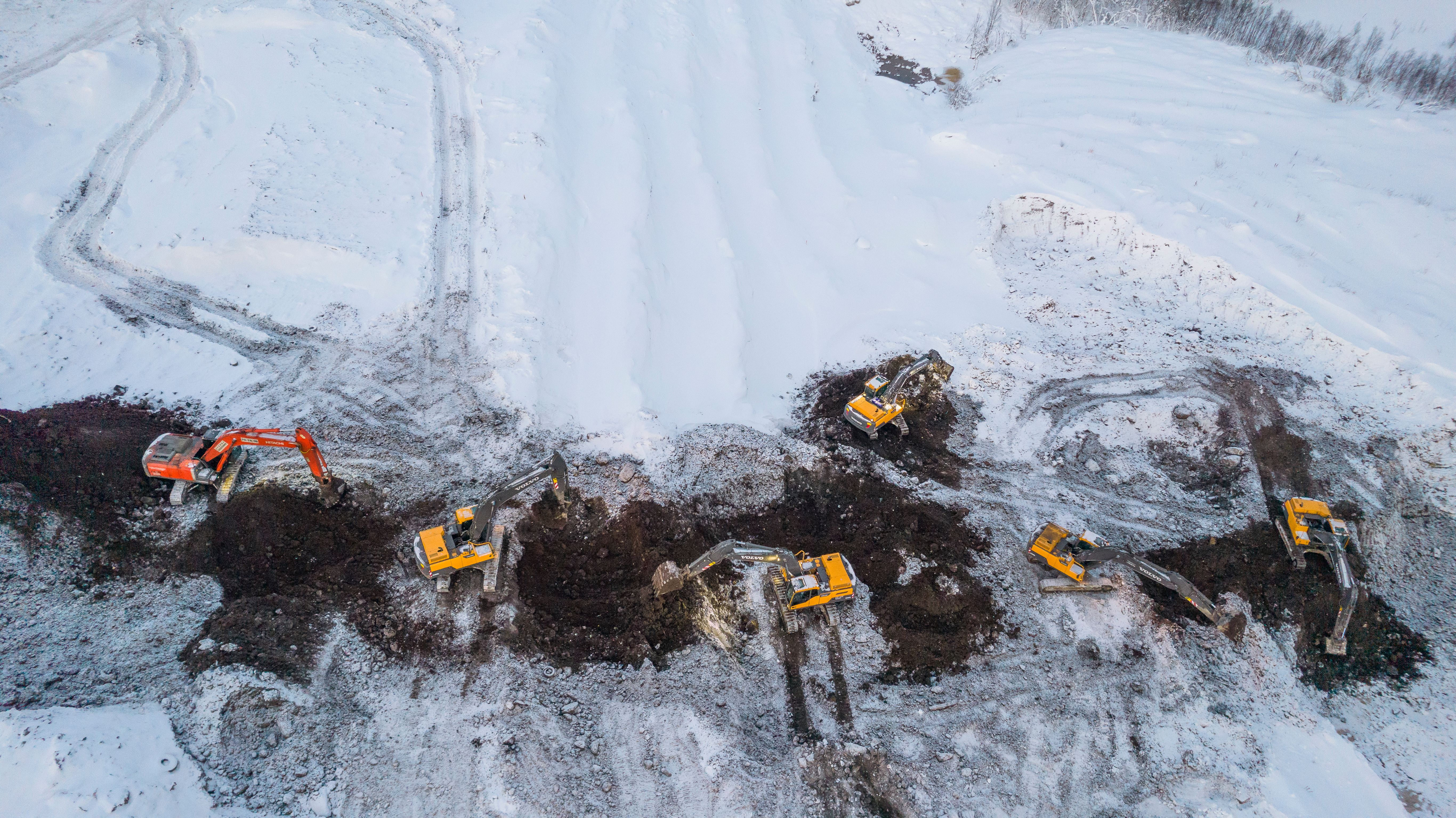
Recent years have marked a renewed interest in Arctic economic development. From promises of mineral resource extraction to potential increased shipping, the Arctic has become a strong point of interest in global geopolitics of trade and resource extraction. Despite such narratives, the reality of mineral resource extraction and shipping is far from straightforward: significant capacity and cost constraints, as well as the substantial impacts of climate change, strongly complicate this supposed global attention towards the Arctic. Recent provocations by US president Donald Trump to purchase or annex Kalaallit Nunaat (Greenland) have propelled the region into global news, and for reasons other than environmental. These provocations trigger questions regarding respect for international laws, treaties, and regulations: how do international laws, treaties, and regulations frame the development of natural resources extraction? How do these legal frameworks shape geopolitical relations in the region? How do local actors use these frameworks to advocate for the respect of their rights? This policy brief reviews recent developments in legal frameworks in the Arctic region, with a focus on two industries: deep-sea mining and shipping. It argues that despite conflictual dynamics between rights of self-determination of peoples and neo-great power politics, recent developments in regional legal and political frameworks signal a renewed commitment to the self-determination of local peoples. However, this commitment to self-determination is articulated alongside asymmetrical power dynamics within states, which casts a shadow over the continuation of collaborative regional diplomatic relations.
1. Deep-sea mining and resource extraction
The announcement of the government of Norway to open licenses to deep-sea mining in the Norwegian Sea triggered international attention as well as contestations. Some countries and organizations advocated for the need to apply the precautionary principle, others an outright ban, and others the need for proper frameworks defining the scope and nature of potential drilling in international waters, including in the High North and Arctic (Symons 2023). While the Norwegian government decided in 2025 to postpone such exploration until at least 2029 (Greenpeace International 2025, Greenpeace UK, 2024; OHCHR 2025), it remains unclear what the future of the industry holds. Indeed, the negotiations at the UN’s International Seabed Authority’s (ISA) conference, which was held in July 2023, left behind legal loopholes as well as discrepancies in the stances of ISA’s 36 members (Symons, 2023; Deep Sea Conservation Coalition n.d.). Some Arctic countries support the implementation of a moratorium (Canada) or a precautionary pause (Finland, Denmark, Sweden) in international waters (Deep Sea Conservation Coalition, n.d.).
The pressures towards deep-sea mining, which countries like China and the United States of America support, come at a time of accrued interest in so-called critical minerals including from Arctic countries like Canada (Exner-Pirot 2025) for a wide range of uses, including for global energy transition goals. On this particular point, scientists and non-profit organizations have highlighted the irony behind the development of mining activities for the purpose of developing renewable or clean energy infrastructures: while its development is allegedly in order to reduce greenhouse gas emissions, this same development poses potential negative impacts on the environment. (Deberdt and Le Billon, 2022; Greenpeace 2026; Sedgwick, 2024).
In the Arctic, however, the development of deep-sea mining may be strongly impacted by certain legal frameworks, among which the BBNJ Agreement, acronym standing for the Agreement under the United Nations Convention on the Law of the Sea on the Conservation and Sustainable Use of Marine Biological Diversity of Areas beyond National Jurisdiction (United Nations, 2023). Indeed, while this Agreement lays the basis for the cooperation and coordination in certain areas – namely marine genetic resources, area-based management tools, environmental impact assessments, and (capacity-building in) marine technology – as well as is geared towards the sustainable use and protection of marine biodiversity and fishing stocks (United Nations 2023, n.d.; UNEP 2025), its implementation may directly impede the development of other extractive industries in the area. However, some Arctic countries, such as Canada and the United States of America, have not ratified it (High Seas Alliance n.d.). The impacts of the BBNJ Agreement therefore depend directly on its ratification and effective implementation.
2. Shipping
On legally binding agreements protecting the Arctic Ocean, the 2018 International Agreement to prevent Unregulated High Seas Fisheries in the Central Arctic Ocean (CAOFA) implements the precautionary principle for fishing in the Central Arctic Ocean by imposing a moratorium on commercial fishing until at least 2034 (Landriault et al. 2025). The CAOFA was signed by 10 countries - including Canada, Iceland, Norway, the United States of America, and Russia. This agreement, which came into force in 2021, in addition to the BBNJ Agreement, provides legal infrastructure to the protection of international waters in the Arctic and High North. Beyond the fishing industry and the (deep-sea) mining industry, these legal frameworks may also have implications for another industry: the shipping industry.
Several organizations and scientists have highlighted the impacts of heavy fuel pollution emanating from the shipping industry in sensitive areas such as the Arctic Ocean. Heavy fuel oil (HFO) is a known harmful pollutant, where, in the event of a spill, effective responses in the Arctic may prove to be impossible (Clean Arctic Alliance n.d.). While the International Maritime Organization adopted a ban on the use and carriage of HFO in the Arctic in 2021, which came into force in 2024, the ban remains gradual until 2029 and is only applicable to select areas in the Arctic (ibid.,). Additionally, according to the Clean Arctic Alliance, the ban will only be applicable to “shipping responsible for around one third of the black carbon emissions in the Arctic” (ibid.,).
The phasing-out of HFO in Arctic shipping needs to incorporate the interests of inhabitants of the Arctic, where most communities rely (at times entirely) on the shipping industry for life’s necessities (van Luijk et al. 2022). The development of the shipping industry in the Arctic is thereby influenced by several areas, such as the need for environmental protection, the need to provide for communities’ necessities, and the impacts of climate change on ice conditions and weather. The shipping industry is vital for communities in the Arctic, as much as the protection of marine and land biodiversity is for subsistence and cultural practices.
The potential for an ice-free Arctic Ocean in the summer by 2050 is drawing much global attention. The Northwest Passage has long been the subject of disputes questioning its sovereignty. While Canada maintains that the Northwest Passage is internal historic waters under its full sovereignty, the United States of America instead views it as an international strait. While the two countries signed an agreement on use and consent in 1988, the unclear legal status of the Passage has direct impacts on a wide range of issues, from security imperatives to search-and-rescue activities to environmental protection (Barnes and Hanlon-Warren 2025). The Northwest Passage is thereby becoming a key strategic point for the development of these industries, while still being considered significantly riskier than other Arctic routes such as the Northern Sea Route and operating under a much more modest scale than southern routes (ibidem).
The legal framing of the shipping industry in the Arctic is complex. The 2021 invasion of Ukraine by Russia and the subsequent sanctions add an additional complexity to its management. The sanctions provoked a halt in cooperation (now gradually being restored) between Russia and other (Arctic) states, posing a great obstacle to cooperative research. Importantly, the diplomatic tensions in the Arctic and the hampering of scientific collaboration pose significant obstacles to the continuation of data collection on pollution and overall climate change impacts in the circumpolar Arctic – data critical for the governance and management of the shipping industry in the Arctic (Devyatkin 2023; Balton and Haig 2026). The shipping industry is thereby undergoing transformations, with long-term implications still unclear given the aforementioned legally binding agreements and the disputed status of some commercial routes.
Policy recommendations
Some environmental protection organizations have argued for replicating the Antarctic Treaty in the Arctic, especially for the Central Arctic Ocean. The application of the precautionary principle seems to have gained momentum for both fisheries management and deep-sea mining through the BBNJ Agreement and the CAOFA. Their implementation, however, remains unequal, and not all countries have either signed or ratified the agreements. The provisions of the agreements, as aforementioned for the cases of the CAOFA and the heavy fuel ban, for instance, also contain certain loopholes and require further clarification.
Central to this, however, the CAOFA Agreement is one of the first multilateral and legally binding treaties to officially mandate the recognition and inclusion of Indigenous peoples’ rights and knowledge, emphasizing and protecting Indigenous peoples’ leadership (Inuit Circumpolar Council, 2024; Molenaar, 2024). The BBNJ Agreement also followed suit. Arctic waters’ governance is thus seeing the emergence and solidification of Indigenous leadership. Future developments in the legal framing of the shipping and deep-sea mining industries should also follow these footsteps.
Conclusion
The Arctic is gaining international momentum, with much discourse about the exploitation of its natural resources circulating both in the media and in the positions taken by elected leaders. The effective regulation of both deep-sea mining and shipping is thereby central to biodiversity preservation and the protection of the rights of Indigenous Peoples and local communities living in the Arctic.
References
Agreement Under The United Nations Convention On The Law Of The Sea On The Conservation And Sustainable Use Of Marine Biological Diversity Of Areas Beyond National Jurisdiction. 2023. https://www.un.org/bbnjagreement/sites/default/files/2024-08/Text%20of%20the%20Agreement%20in%20English.pdf.
Balton, David, and Sarah Haig. 2026. "Revitalizing the Arctic Council." The Belfer Center for Science and International Affairs. February 24, 2026. https://www.belfercenter.org/research-analysis/revitalizing-arctic-council.
Barnes, J., and E. Hanlon-Warren. 2025. "Explainer: The Northwest Passage’s Shipping Potential, Legal Status, and What’s at Stake." The Belfer Center for Science and International Affairs. July 28, 2025. https://www.belfercenter.org/research-analysis/explainer-northwest-passages-shipping-potential-legal-status-and-whats-stake.
Clean Arctic Alliance. 2025. "The Risks of Heavy Fuel Oil in the Arctic." Clean Arctic Alliance. December 16, 2025. https://cleanarctic.org/campaigns/arctic-biodiversity/heavy-fuel-oil-free-arctic/.
Deberdt, R., and P. Le Billon. 2022. "A Green Transition Should Prioritize the Ocean’s Carbon Sinks Over Deep-Sea Mining." Policy Options. July 28, 2022. https://policyoptions.irpp.org/2022/07/a-green-transition-should-prioritize-the-oceans-carbon-sinks-over-deep-sea-mining/.
Deep Sea Conservation Coalition. 2025. "Governments and Parliamentarians." Deep Sea Conservation Coalition. October 22, 2025. https://deep-sea-conservation.org/solutions/no-deep-sea-mining/momentum-for-a-moratorium/governments-and-parliamentarians/.
Devyatkin, Pavel. 2023. "Can Arctic Cooperation be Restored?" The Arctic Institute - Center for Circumpolar Security Studies. March 28, 2023. https://www.thearcticinstitute.org/can-arctic-cooperation-restored/.
Exner-Pirot, Heather. 2025. "The Umbrella Term “Critical Minerals” is Good for Messaging But Bad for Policy." Macdonald-Laurier Institute. October 24, 2025. https://macdonaldlaurier.ca/the-umbrella-term-critical-minerals-is-good-for-messaging-but-bad-for-policy-heather-exner-pirot/.
Greenpeace International. 2025. "Deep Sea Mining in the Arctic Stopped Once Again." Greenpeace International. December 3, 2025. https://www.greenpeace.org/international/press-release/80039/deep-sea-mining-in-the-arctic-stopped-once-again/.
Greenpeace UK. 2024. "Deep Sea Mining – What You Need to Know." Greenpeace UK. August 13, 2024. https://www.greenpeace.org.uk/challenges/deep-sea-mining/.
High Seas Alliance Treaty Ratification. 2026. "High Seas Alliance Treaty Ratification - Signature and Ratification Progress Table." High Seas Alliance. February 16, 2026. https://highseasalliance.org/treaty-ratification/table-of-countries/.
Inuit Circumpolar Council. 2024. "Indigenous Knowledge Strongly Asserted at the Central Arctic Ocean Fisheries Agreement (CAOFA) COP3, as Implementation Work Advances." Inuit Circumpolar Council Canada. June 19, 2024. https://www.inuitcircumpolar.com/news/indigenous-knowledge-strongly-asserted-at-the-central-arctic-ocean-fisheries-agreement-caofa-cop3-as-implementation-work-advances/.
Landriault, Mathieu, Mohammed Benaissa, and Andrew Soer. 2025. "The Central Arctic Ocean and the BBNJ Agreement: Potential and Limitations." The Polar Journal, 1–15. https://doi.org/10.1080/2154896X.2025.2603871.
Molenaar, Erik J. 2024. "The Central Arctic Ocean Fisheries Agreement and Arctic Indigenous Peoples." Marine Policy 164: 106160. https://doi.org/10.1016/j.marpol.2024.106160.
OHCHR (Office of the United Nations High Commissioner for Human Rights). 2025. "UN Experts Commend Norway Decision to Postpone Deep-Sea Mining Licensing." OHCHR. December 15, 2025. https://www.ohchr.org/en/press-releases/2025/12/un-experts-commend-norway-decision-postpone-deep-sea-mining-licensing.
Sedgwick, Anna. 2026. "New Study: Deep Sea Mining “Not Even Needed” for Green Energy Transition." Greenpeace UK. March 16, 2026. https://www.greenpeace.org.uk/news/new-study-deep-sea-mining-not-even-needed-for-green-energy-transition/.
Symons, Angela. 2023. "Deep Sea Mining: Here’s Which Countries Oppose and Support the Controversial Practice." Euronews. August 2, 2023. https://www.euronews.com/2023/08/02/deep-sea-mining-heres-which-countries-oppose-and-support-the-controversial-practice.
UNEP (United Nations Environment Programme). 2025. "Agreement on Marine Biological Diversity of Areas Beyond National Jurisdiction (BBNJ Agreement)." UNEP. https://www.unep.org/resources/agreement-marine-biological-diversity-areas-beyond-national-jurisdiction-bbnj-agreement.
United Nations. n.d. "BBNJ Agreement | Agreement on Marine Biological Diversity of Areas Beyond National Jurisdiction." Accessed May 28, 2026. https://www.un.org/bbnjagreement/en.
van Luijk, Nicole, Natalie A. Carter, Jackie Dawson, Colleen Parker, Kayla Grey, Jenn Provencher, and Alison Cook. 2022. "Community-Identified Risks to Hunting, Fishing, and Gathering (Harvesting) Activities from Increased Marine Shipping Activity in Inuit Nunangat, Canada." Regional Environmental Change 22 (1): 24. https://doi.org/10.1007/s10113-022-01894-3.
About the Author
Anna Soer is a PhD candidate at the University of Ottawa looking at sustainable development and energy security in Nunavut and Kalaallit Nunaat. She is an affiliated researcher at the Observatoire de la politique et de la sécurité de l’Arctique (OPSA) and sits on the Board of the Arctic Hub of the university of Ottawa as the students’ representative. Further research interests include colonial violence, gender, and economic development in the Arctic.